Good Practice and...
Professional responsibility, “good practice and malpractice” in obstetrics is one of the major areas of medical-legal litigation.
Filtres actifs
Professional responsibility, “good practice and malpractice” in obstetrics is one of the major areas of medical-legal litigation.
How is the due date estimated? How do we know when the cow begins the prepartum period? When is professional assistance required? These are some of many questions that may arise during calving. For this reason, Servet has decided to publish this book that answers the main questions regarding calving in a simple and easy way. In this original book, you will find the essential features that need to be taken into consideration during gestation, calving and the postpartum period in order to deal with calving successfully, avoid dystocia and increase the survival rate of the calves.
This book provides new insight into feline ultrasound in daily practice. From cranial to caudal, the feline species has been thoroughly scanned, detailing for each body region the scanning technique, as well as the ultrasonography of both the normal and the diseased organ. In each chapter, key points highlight feline species' special features and help the reader focus on the most important. Several short ultrasound clips are also available in the electronic version of the book, increasing, even more, the interest of this book: an up-to-date text and several references to the latest studies.
The second edition of this educational atlas on cats expands on its initial goal of helping veterinary surgeons communicate with owners by adding to the content of the first edition with 16 new sheets. Needless to say that the previous topics have been revised and updated with the latest developments in each area.
Growing investments in healthcare do not necessarily produce corresponding improvements in the perceived health of their recipients, whether individual patients or society as a whole. Sometimes, even the opposite is true: growing investments in healthcare lead to lower benefits perceived by patients. How to quantify the health regained by patients? How to measure what for does it really matter to them, when physical health is not fully recoverable? How to help physician and administrators in identifying the correct objectives and improvements? What scientific instruments can estimate the prospect of patient and society in the allocation of limited resources?
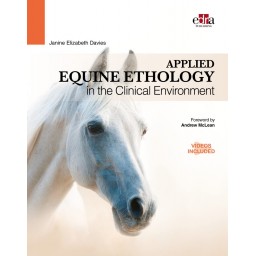
The book has been designed to guide professionals through the behavioural assessment of the equine patient during clinical procedures and gain an understanding of how to develop a behavioural management strategy, which is the most appropriate for each individual horse and suitable for the type of procedure to be performed. The text will be accompanied by technical illustrations, images, and practical video clips.