Stress, compassion...
There is a need to publicize the syndromes occurring in veterinary personnel due to work-related stress. Vets are apathetic or leaving the profession.
Filtres actifs
There is a need to publicize the syndromes occurring in veterinary personnel due to work-related stress. Vets are apathetic or leaving the profession.
Small handbook gathering all the life cycles of the most common ectoparasites in dogs and cats. Similar parasites are grouped together based on their life cycle and, consequently, their sensitivity to parasiticides. The aim is to provide readers with key aspects of parasite control and prevention, highlighting those diseases that can be transmitted by them. Geographic distribution maps are also included.
This book, written by experts with a wide experience in the field, reviews, in a practical and concise manner, the emerging and reemerging diseases of swine of economic or zoonotic importance, as well as those with an impact that is still to be determined, but against which active and efficient epidemiological surveillance is necessary.
Why do people buy things? What tools can we use to convince clients and sell our services? In this work, the authors offer their more than 20 years of experience working in different areas of a veterinary practice. Written with a practical approach, this book reviews the current knowledge in neuromarketing and provides advice for its implementation in the real daily life of veterinary practices.
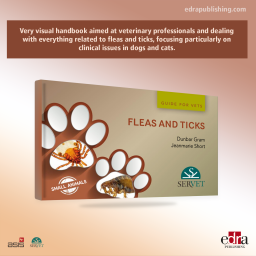
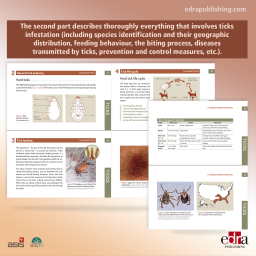
Very visual handbook aimed at veterinary professionals and dealing with everything related to fleas and ticks, focusing particularly on clinical issues in dogs and cats. The first part is entirely dedicated to fleas (including their identification, life cycle, clinical signs derived from flea infestation, flea allergy dermatitis (FAD), and prevention and control measures, among others). The second part describes thoroughly everything that involves ticks infestation (including species identification and their geographic distribution, feeding behaviour, the biting process, diseases transmitted by ticks, prevention and control measures, etc.).
The second edition of this educational atlas on cats expands on its initial goal of helping veterinary surgeons communicate with owners by adding to the content of the first edition with 16 new sheets. Needless to say that the previous topics have been revised and updated with the latest developments in each area.