The GAVeCeLT manual of...
The use of intravenous access devices is fundamental for all patients needing frequent blood sample collection, artificial nutrition, chemotherapy, antibiotic therapy, and any other intravenous treatment.
Filtres actifs
The use of intravenous access devices is fundamental for all patients needing frequent blood sample collection, artificial nutrition, chemotherapy, antibiotic therapy, and any other intravenous treatment.
Small handbook gathering all the life cycles of the most common ectoparasites in dogs and cats. Similar parasites are grouped together based on their life cycle and, consequently, their sensitivity to parasiticides. The aim is to provide readers with key aspects of parasite control and prevention, highlighting those diseases that can be transmitted by them. Geographic distribution maps are also included.
In this practical atlas, the description of the anatomy of the dog’s joints provided in the previous edition has been completed and complemented with new tools, 3D animations, and self-evaluation tests that will help readers acquire knowledge and form a better understanding of joint anatomy and function – elements of great importance for each dog’s physical health and well-being.
This book provides new insight into feline ultrasound in daily practice. From cranial to caudal, the feline species has been thoroughly scanned, detailing for each body region the scanning technique, as well as the ultrasonography of both the normal and the diseased organ. In each chapter, key points highlight feline species' special features and help the reader focus on the most important. Several short ultrasound clips are also available in the electronic version of the book, increasing, even more, the interest of this book: an up-to-date text and several references to the latest studies.
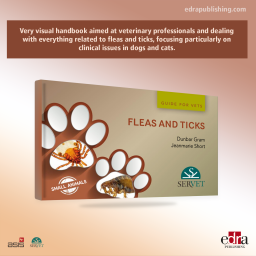
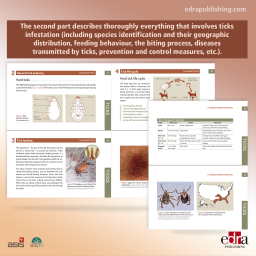
Very visual handbook aimed at veterinary professionals and dealing with everything related to fleas and ticks, focusing particularly on clinical issues in dogs and cats. The first part is entirely dedicated to fleas (including their identification, life cycle, clinical signs derived from flea infestation, flea allergy dermatitis (FAD), and prevention and control measures, among others). The second part describes thoroughly everything that involves ticks infestation (including species identification and their geographic distribution, feeding behaviour, the biting process, diseases transmitted by ticks, prevention and control measures, etc.).
This book provides a comprehensive review of in ovo techniques and treatments in poultry eggs, which are aimed at improving embryonic development and decreasing economic losses in poultry farms. The book is divided into four chapters, which address the basics of in ovo techniques and sites of in ovo injection, nutrient utilisation for the development of the chick embryo, the role of early in ovo feeding for the chick embryo, and applications of in ovo technology for various nutrients and biological supplements in poultry.