The GAVeCeLT manual of...
The use of intravenous access devices is fundamental for all patients needing frequent blood sample collection, artificial nutrition, chemotherapy, antibiotic therapy, and any other intravenous treatment.
Filtres actifs
The use of intravenous access devices is fundamental for all patients needing frequent blood sample collection, artificial nutrition, chemotherapy, antibiotic therapy, and any other intravenous treatment.
Small handbook gathering all the life cycles of the most common ectoparasites in dogs and cats. Similar parasites are grouped together based on their life cycle and, consequently, their sensitivity to parasiticides. The aim is to provide readers with key aspects of parasite control and prevention, highlighting those diseases that can be transmitted by them. Geographic distribution maps are also included.
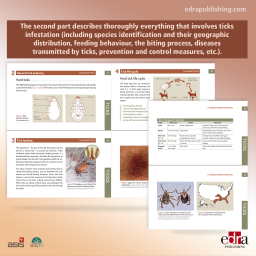
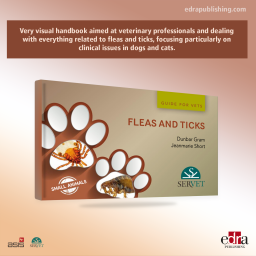
Very visual handbook aimed at veterinary professionals and dealing with everything related to fleas and ticks, focusing particularly on clinical issues in dogs and cats. The first part is entirely dedicated to fleas (including their identification, life cycle, clinical signs derived from flea infestation, flea allergy dermatitis (FAD), and prevention and control measures, among others). The second part describes thoroughly everything that involves ticks infestation (including species identification and their geographic distribution, feeding behaviour, the biting process, diseases transmitted by ticks, prevention and control measures, etc.).
This book provides a comprehensive review of in ovo techniques and treatments in poultry eggs, which are aimed at improving embryonic development and decreasing economic losses in poultry farms. The book is divided into four chapters, which address the basics of in ovo techniques and sites of in ovo injection, nutrient utilisation for the development of the chick embryo, the role of early in ovo feeding for the chick embryo, and applications of in ovo technology for various nutrients and biological supplements in poultry.
Cet ouvrage, intitulé Échographie POCUS pleuro-pulmonaire chez le chien et le chat, a été conçu pour être une référence aussi bien pour les nouveaux usagers que pour les échographes vétérinaires expérimentés, déjà familiarisés avec l’échographie POCUS. Il propose de nombreux conseils, astuces et informations que nous jugeons, en tant que non radiologues ou cardiologues, particulièrement utiles pour étudier et contrôler la cavité pleurale et les poumons. Il offre une approche didactique étape par étape à la réalisation des échographies de la cavité pleurale et des poumons et s’appuie sur une structure par questions binaires pour permettre aussi bien aux novices de se former qu’aux experts de perfectionner leurs compétences.