
- Livres en français
-
Livres en anglais
- Dentistry Books
- Medicine Books
-
Veterinary Books
-
Companion Animals
- Anaesthesia/Analgesia
- Anatomy
- Cytology/Laboratorial
- Veterinary Dentistry
- Diagnostic imaging
- Emergency
- Endocrinology/Reproduction
- Equine
- Ethology
- Infectious diseasesand immunology
- Nephrology/Urology
- Surgery and traumatology/Orthopaedics
- Nutrition
- Rehabilitation
- Parasites
- Ophthalmology
- Oncology
- Endocrinology
- Dermatology
- Cardiology
- Pet owner educationalatlas
- Senior care
- Surgery
- Management
- Livestock
- Management
-
Companion Animals
- Livres en français
-
Livres en anglais
- Dentistry Books
- Medicine Books
-
Veterinary Books
-
Companion Animals
- Anaesthesia/Analgesia
- Anatomy
- Cytology/Laboratorial
- Veterinary Dentistry
- Diagnostic imaging
- Emergency
- Endocrinology/Reproduction
- Equine
- Ethology
- Infectious diseasesand immunology
- Nephrology/Urology
- Surgery and traumatology/Orthopaedics
- Nutrition
- Rehabilitation
- Parasites
- Ophthalmology
- Oncology
- Endocrinology
- Dermatology
- Cardiology
- Pet owner educationalatlas
- Senior care
- Surgery
- Management
- Livestock
- Management
-
Companion Animals


Echographie POCUS...
Cet ouvrage, intitulé Échographie POCUS pleuro-pulmonaire chez le chien et le chat, a été conçu pour être une référence aussi bien pour les nouveaux usagers que pour les échographes vétérinaires expérimentés, déjà familiarisés avec l’échographie POCUS. Il propose de nombreux conseils, astuces et informations que nous jugeons, en tant que non radiologues ou cardiologues, particulièrement utiles pour étudier et contrôler la cavité pleurale et les poumons. Il offre une approche didactique étape par étape à la réalisation des échographies de la cavité pleurale et des poumons et s’appuie sur une structure par questions binaires pour permettre aussi bien aux novices de se former qu’aux experts de perfectionner leurs compétences.
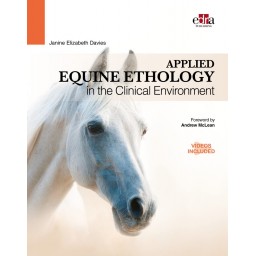
Applied Equine...
The book has been designed to guide professionals through the behavioural assessment of the equine patient during clinical procedures and gain an understanding of how to develop a behavioural management strategy, which is the most appropriate for each individual horse and suitable for the type of procedure to be performed. The text will be accompanied by technical illustrations, images, and practical video clips.