
- Livres en français
-
Livres en anglais
- Dentistry Books
- Medicine Books
-
Veterinary Books
-
Companion Animals
- Anaesthesia/Analgesia
- Anatomy
- Cytology/Laboratorial
- Veterinary Dentistry
- Diagnostic imaging
- Emergency
- Endocrinology/Reproduction
- Equine
- Ethology
- Infectious diseasesand immunology
- Nephrology/Urology
- Surgery and traumatology/Orthopaedics
- Nutrition
- Rehabilitation
- Parasites
- Ophthalmology
- Oncology
- Endocrinology
- Dermatology
- Cardiology
- Pet owner educationalatlas
- Senior care
- Surgery
- Management
- Livestock
- Management
-
Companion Animals
- Livres en français
-
Livres en anglais
- Dentistry Books
- Medicine Books
-
Veterinary Books
-
Companion Animals
- Anaesthesia/Analgesia
- Anatomy
- Cytology/Laboratorial
- Veterinary Dentistry
- Diagnostic imaging
- Emergency
- Endocrinology/Reproduction
- Equine
- Ethology
- Infectious diseasesand immunology
- Nephrology/Urology
- Surgery and traumatology/Orthopaedics
- Nutrition
- Rehabilitation
- Parasites
- Ophthalmology
- Oncology
- Endocrinology
- Dermatology
- Cardiology
- Pet owner educationalatlas
- Senior care
- Surgery
- Management
- Livestock
- Management
-
Companion Animals


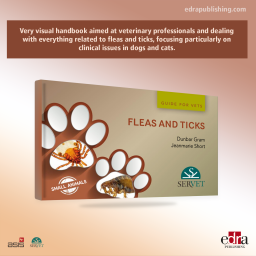
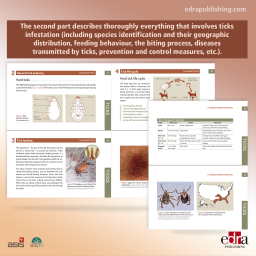
Fleas and Ticks in...
Very visual handbook aimed at veterinary professionals and dealing with everything related to fleas and ticks, focusing particularly on clinical issues in dogs and cats. The first part is entirely dedicated to fleas (including their identification, life cycle, clinical signs derived from flea infestation, flea allergy dermatitis (FAD), and prevention and control measures, among others). The second part describes thoroughly everything that involves ticks infestation (including species identification and their geographic distribution, feeding behaviour, the biting process, diseases transmitted by ticks, prevention and control measures, etc.).
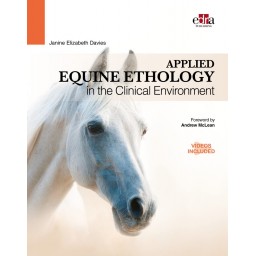
Applied Equine...
The book has been designed to guide professionals through the behavioural assessment of the equine patient during clinical procedures and gain an understanding of how to develop a behavioural management strategy, which is the most appropriate for each individual horse and suitable for the type of procedure to be performed. The text will be accompanied by technical illustrations, images, and practical video clips.