Direct Microscopy in...
Fresh, direct, and phase-contrast microscopy is an easy-to-perform, replicable, and economical diagnostic technique included in the guidelines of the Centers of Disease Control of Atlanta in 2015
Filtres actifs
Fresh, direct, and phase-contrast microscopy is an easy-to-perform, replicable, and economical diagnostic technique included in the guidelines of the Centers of Disease Control of Atlanta in 2015
The previous editions of this manual have enjoyed great appreciation; the didactic effectiveness, the clarity and coherence of the book have made it a reference for many students, as well as a practical guide for professionals and specialists. For this third edition, the majority of the chapters have been rewritten and new clinical cases have been added. The book is based on lavishly illustrated clinical cases. Also, given their frequency in oral surgery, proper space at the end of the book is given to the most common post-surgical complications, strategies of prevention, and management.
This publication explains step by step how to approach and carry out caudal abdomen surgeries, by means of photos, diagrams and real clinical cases. Real clinical cases are described, showing the most appropriate surgical interventions for each of them.. Essential both for practicing professionals and students of veterinary surgery.
Photographs, diagrams and real clinical cases explain, step by step, the methods of approach and resolution for the main surgical interventions in the rectal, anal and perineal zones. An essential work for both practicing professionals and surgery students.
This atlas compiles clinical cases and images of pathological conditions. It will be very helpful for any vet needing to recognise macroscopical and microscopical lesions in sheep.
Any discussion of digital dentistry nowadays means talking about an ecosystem that is set to replace the traditional way of working in every area: production processes, time management, and relationships with other professionals.
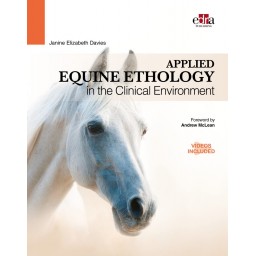
The book has been designed to guide professionals through the behavioural assessment of the equine patient during clinical procedures and gain an understanding of how to develop a behavioural management strategy, which is the most appropriate for each individual horse and suitable for the type of procedure to be performed. The text will be accompanied by technical illustrations, images, and practical video clips.