Good Practice and...
Professional responsibility, “good practice and malpractice” in obstetrics is one of the major areas of medical-legal litigation.
Filtres actifs
Professional responsibility, “good practice and malpractice” in obstetrics is one of the major areas of medical-legal litigation.
The previous editions of this manual have enjoyed great appreciation; the didactic effectiveness, the clarity and coherence of the book have made it a reference for many students, as well as a practical guide for professionals and specialists. For this third edition, the majority of the chapters have been rewritten and new clinical cases have been added. The book is based on lavishly illustrated clinical cases. Also, given their frequency in oral surgery, proper space at the end of the book is given to the most common post-surgical complications, strategies of prevention, and management.
The common idea that edentulism can always be solved with implants is questioned in this book given that the most recent literature highlights the higher risk of implant prosthodontics than traditional conventional toothborne prosthodontics. This book represents a procedural guide to the fabrication of full veneer crowns with vertical margin design. The preparation of the natural tooth as a prosthetic pillar is certainly a “traditional” procedure that is still one of the most common activities that dentists perform today and the so-called “vertical” preparation is given full credit in this book.
This atlas compiles clinical cases and images of pathological conditions. It will be very helpful for any vet needing to recognise macroscopical and microscopical lesions in sheep.
Any discussion of digital dentistry nowadays means talking about an ecosystem that is set to replace the traditional way of working in every area: production processes, time management, and relationships with other professionals.
The book deals with the reconstruction of posterior teeth with direct and indirect adhesive techniques and consist of two volumes. This text, the second reconstruction volume, deals with indirect techniques, defining the current indications but also describing the Morphology Driven Preparation Technique (MDPT), an innovative cavity design applicable to all types of conventional adhesively cemented restorations. An essential added value are all the procedures to treat sub-gingival lesions tackled with restorative methods integrated with surgical procedures related to caries, fractures, cervical root resorption.
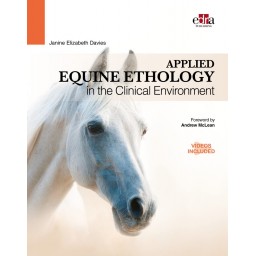
The book has been designed to guide professionals through the behavioural assessment of the equine patient during clinical procedures and gain an understanding of how to develop a behavioural management strategy, which is the most appropriate for each individual horse and suitable for the type of procedure to be performed. The text will be accompanied by technical illustrations, images, and practical video clips.