Stress, compassion...
There is a need to publicize the syndromes occurring in veterinary personnel due to work-related stress. Vets are apathetic or leaving the profession.
Active filters
There is a need to publicize the syndromes occurring in veterinary personnel due to work-related stress. Vets are apathetic or leaving the profession.
Small handbook gathering all the life cycles of the most common ectoparasites in dogs and cats. Similar parasites are grouped together based on their life cycle and, consequently, their sensitivity to parasiticides. The aim is to provide readers with key aspects of parasite control and prevention, highlighting those diseases that can be transmitted by them. Geographic distribution maps are also included.
This book aims at providing an updated overview on the most frequent pathogens responsible for Porcine Respiratory Disease Complex (PRDC), viruses and bacteria, acting in association and mainly potentiating their anatomical and functional effects and worsening the clinical outcome and economic impact. The authors, prestigious and rewarded experts with a wide experience in respiratory diseases in pigs, have focused their efforts on preparing chapters that illustrate the latest information and data on the treated topics, while making them as readable as possible. The book inspires to facilitate comprehension and educational enrichment to the preparation of a well-designed, practical approach.
This useful handbook describes in detail the entire process of diagnosis, collection and sending of samples to the laboratory, the interpretation of findings, and the description of the basic laboratory techniques. It goes deeper into the knowledge of the different swine pathologies and clearly exposes the different pathologies using flow charts that will guide veterinary surgeons through the diagnostic process. At the end of each chapter there is a clinical case that completes the information offered.
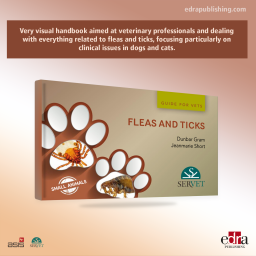
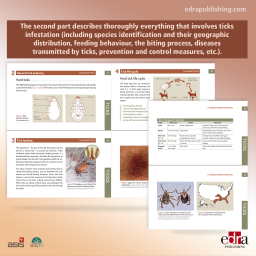
Very visual handbook aimed at veterinary professionals and dealing with everything related to fleas and ticks, focusing particularly on clinical issues in dogs and cats. The first part is entirely dedicated to fleas (including their identification, life cycle, clinical signs derived from flea infestation, flea allergy dermatitis (FAD), and prevention and control measures, among others). The second part describes thoroughly everything that involves ticks infestation (including species identification and their geographic distribution, feeding behaviour, the biting process, diseases transmitted by ticks, prevention and control measures, etc.).
This atlas addresses the immune mechanisms of dogs and cats and describes the most important infectious and parasitic diseases. It has been designed as an aid to veterinary surgeons to help owners understand the processes underlying the development of some of the most important diseases of their pets, the immune mechanisms involved, and the importance of disease prevention through immunisation. The digital version includes 3D animations.
Using a simple and graphical approach this atlas addresses the mechanisms involved in the immune responses of dogs and cats, and describes the most important infectious and parasitic diseases, as well as the corresponding preventive strategies.
The most updated information on avian influenza with a practical approach. The authors review the aetiology, clinical signs, diagnosis, and control of avian influenza viruses. It also includes numerous graphic resources to make the contents more understandable to readers.
Infectious bronchitis is an acute and highly contagious respiratory disease of chickens characterized by respiratory signs comprising gasping, coughing, sneezing, tracheal rales and nasal discharge. In addition, severe respiratory distress may occur in young chickens. Respiratory distress, decrease in egg production, and loss of internal egg quality and eggshell quality have been reported in layers. Some strains of the virus produce severe kidney damage and may be associated with high mortality.