Stress, compassion...
There is a need to publicize the syndromes occurring in veterinary personnel due to work-related stress. Vets are apathetic or leaving the profession.
Active filters
There is a need to publicize the syndromes occurring in veterinary personnel due to work-related stress. Vets are apathetic or leaving the profession.
A visual guide with a strongly educational approach covering the main joints in the limbs of the dog. It shows the anatomical elements of each of these joints in three-dimensional diagrams. The views chosen for each case have been selected for a practical purpose, showing the position of the elements involved in the most commonly used surgical approaches. It also describes the key orthopaedic conditions affecting each joint and the most commonly used surgical approaches. It contains a large number of images and illustrations, and a selection of views presented in digital video format.
Using a variety of graphical resources, this atlas describes the cutaneous clinical patterns most commonly encountered in dogs (accounting for 90 % of cases seen in veterinary clinics), as well as the associated aetiologies. For each pattern, corresponding guidelines are provided to ensure correct diagnosis. This book has been designed as an educational guide for veterinary practitioners to facilitate the diagnosis of skin diseases. The wealth of graphical material complementing the text provides veterinary surgeons with reference images with which to compare the cases they encounter in the clinic.
Why do people buy things? What tools can we use to convince clients and sell our services? In this work, the authors offer their more than 20 years of experience working in different areas of a veterinary practice. Written with a practical approach, this book reviews the current knowledge in neuromarketing and provides advice for its implementation in the real daily life of veterinary practices.
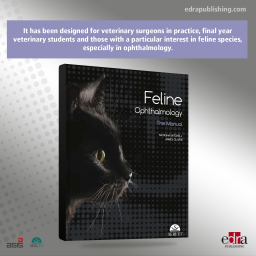
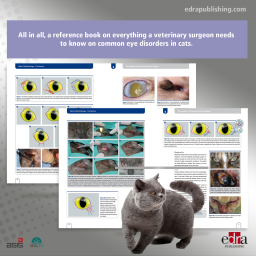
There is no doubt that cats are more and more popular as pets nowadays. It is therefore mandatory for veterinary surgeons to increase their knowledge on the diseases most frequently seen in feline practice. For that reason, the aim of this book is to provide the clinician with a visual guide to accurately diagnose and treat the most common ophthalmological eye disorders in cats. Feline Ophthalmology – The Manual is designed for veterinary surgeons in practice, final year veterinary students and those with a particular interest in feline species, especially in ophthalmology.
The second edition of this educational atlas on cats expands on its initial goal of helping veterinary surgeons communicate with owners by adding to the content of the first edition with 16 new sheets. Needless to say that the previous topics have been revised and updated with the latest developments in each area.