The GAVeCeLT manual of...
The use of intravenous access devices is fundamental for all patients needing frequent blood sample collection, artificial nutrition, chemotherapy, antibiotic therapy, and any other intravenous treatment.
Active filters
The use of intravenous access devices is fundamental for all patients needing frequent blood sample collection, artificial nutrition, chemotherapy, antibiotic therapy, and any other intravenous treatment.
The CBCT (Cone Beam Computed Tomography) is a real breakthrough for dentistry because it offers many advantages: low radiation dose to patients, high definition with very small voxels, the possibility to see the tooth and the surrounding structures in three different planes, overcoming any anatomical overlapping. The introductory chapters provide the reader with the knowledge and basic tools to understand the CBCT. Everything else is an atlas, highly enjoyable, which includes the use of CBCT in both clinical and surgical dentistry, and describes in details not only the diagnostic phase but also the operational use to program the individual case, and control the future outcome.
Small handbook gathering all the life cycles of the most common ectoparasites in dogs and cats. Similar parasites are grouped together based on their life cycle and, consequently, their sensitivity to parasiticides. The aim is to provide readers with key aspects of parasite control and prevention, highlighting those diseases that can be transmitted by them. Geographic distribution maps are also included.
Handbook entirely dedicated to parasitology and parasitic diseases in bovine species based on a handy, visual approach of the topic. It includes the most essential contents and many significant tips and graphic resources (life cycles, clinical signs, diagnosis, treament guidelines, etc.) to turn this atlas into a reference in its field.
This book deals with pain in companion animals and how it affects their welfare, health and, of course, behaviour. It describes the difficulties encountered, throughout history, to finally reach the conclusion that animals and humans share the same neurophy- siological mechanisms to feel pain, and what their sensitive pathways are. It then goes deeper into the changes that pain can cause in the behaviour of dogs and cats and the tools available to the veterinary surgeon to control it.
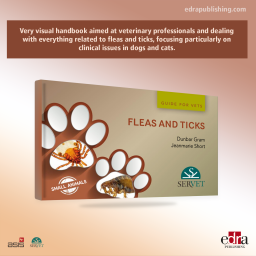
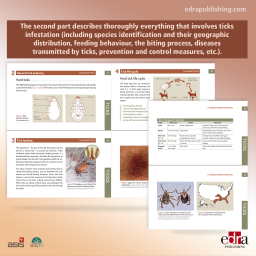
Very visual handbook aimed at veterinary professionals and dealing with everything related to fleas and ticks, focusing particularly on clinical issues in dogs and cats. The first part is entirely dedicated to fleas (including their identification, life cycle, clinical signs derived from flea infestation, flea allergy dermatitis (FAD), and prevention and control measures, among others). The second part describes thoroughly everything that involves ticks infestation (including species identification and their geographic distribution, feeding behaviour, the biting process, diseases transmitted by ticks, prevention and control measures, etc.).
This atlas describes the avian necropsy technique in a detailed and systematic manner. It also provides information about the pathologies commonly observed in poultry at the slaughterhouse, as well as guidelines on how to collect samples for diagnostic tests. This updated edition includes, in addition to more than 200 images, explanatory videos to obtain the maximum diagnostic yield.
The goal of this work is to present the reader with the most common diseases that can produce immunosuppression in poultry, provide guidance for the diagnosis of immunosuppressive diseases, and examine the challenges that a diagnostician may face in confirming a diagnosis of immunosuppression. The book will feature an extensive collection of color photographs depicting gross and microscopic images.