The GAVeCeLT manual of...
The use of intravenous access devices is fundamental for all patients needing frequent blood sample collection, artificial nutrition, chemotherapy, antibiotic therapy, and any other intravenous treatment.
Active filters
The use of intravenous access devices is fundamental for all patients needing frequent blood sample collection, artificial nutrition, chemotherapy, antibiotic therapy, and any other intravenous treatment.
Small handbook gathering all the life cycles of the most common ectoparasites in dogs and cats. Similar parasites are grouped together based on their life cycle and, consequently, their sensitivity to parasiticides. The aim is to provide readers with key aspects of parasite control and prevention, highlighting those diseases that can be transmitted by them. Geographic distribution maps are also included.
Because the prolificacy of sows can now be very high, piglets require special attention to ensure their survival. This book describes the importance of colostrum and its immediate ingestión after farrowing. The energy, immunity,and growth factors contained within make colostrum feeding essential for the optimal development of newborn piglets.
Technical work mainly focused on the management of pig farms working with hyperprolific genetics, which almost completely monopolize the market in this species in both productive and reproductive terms. The author, a renowned experienced specialist in swine genetics, provides key information to facilitate the management of these lines by veterinary professionals.
Visual guide to the recognition, description and interpretation of lesions of the digestive apparatus of pigs. Integrates macroscopic and microscopic findings associated with lesions that develop during the course of various pathological processes. Brief descriptions of the main anatomopathological features of each image are provided, which is essential for proper understanding of the disease process, diagnosis and underlying causes.
Using a variety of graphical resources, this atlas describes the cutaneous clinical patterns most commonly encountered in dogs (accounting for 90 % of cases seen in veterinary clinics), as well as the associated aetiologies. For each pattern, corresponding guidelines are provided to ensure correct diagnosis. This book has been designed as an educational guide for veterinary practitioners to facilitate the diagnosis of skin diseases. The wealth of graphical material complementing the text provides veterinary surgeons with reference images with which to compare the cases they encounter in the clinic.
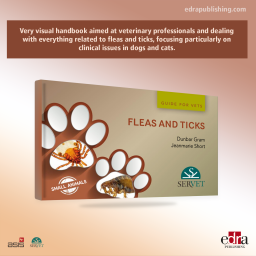
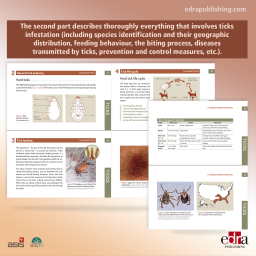
Very visual handbook aimed at veterinary professionals and dealing with everything related to fleas and ticks, focusing particularly on clinical issues in dogs and cats. The first part is entirely dedicated to fleas (including their identification, life cycle, clinical signs derived from flea infestation, flea allergy dermatitis (FAD), and prevention and control measures, among others). The second part describes thoroughly everything that involves ticks infestation (including species identification and their geographic distribution, feeding behaviour, the biting process, diseases transmitted by ticks, prevention and control measures, etc.).