The GAVeCeLT manual of...
The use of intravenous access devices is fundamental for all patients needing frequent blood sample collection, artificial nutrition, chemotherapy, antibiotic therapy, and any other intravenous treatment.
Active filters
The use of intravenous access devices is fundamental for all patients needing frequent blood sample collection, artificial nutrition, chemotherapy, antibiotic therapy, and any other intravenous treatment.
Electrocardiography of the dog and cat, 2nd edition provides all the theoretical and practical information necessary to understand and identify rhythm abnormalities. This text will be particularly useful to accurately diagnose complex arrhythmias using precise electrocardiographic criteria that the authors have developed by confirming mechanisms of arrhythmias with intracardiac electrophysiologic studies. This book is a must-have reference for anyone interested in learning the basics of electrocardiography and those who face the challenge of interpreting the most complex arrhythmias in a clinical or research setting.
Small handbook gathering all the life cycles of the most common ectoparasites in dogs and cats. Similar parasites are grouped together based on their life cycle and, consequently, their sensitivity to parasiticides. The aim is to provide readers with key aspects of parasite control and prevention, highlighting those diseases that can be transmitted by them. Geographic distribution maps are also included.
This publication explains step by step how to approach and carry out caudal abdomen surgeries, by means of photos, diagrams and real clinical cases. Real clinical cases are described, showing the most appropriate surgical interventions for each of them.. Essential both for practicing professionals and students of veterinary surgery.
Photographs, diagrams and real clinical cases explain, step by step, the methods of approach and resolution for the main surgical interventions in the rectal, anal and perineal zones. An essential work for both practicing professionals and surgery students.
This book describes, in a way that greatly facilitates learning, the most relevant renal diseases in cats and dogs, with a focus on their pathophysiology and diagnosis, as well as on how they can be treated. The content not only reflects the latest advances in nephrology, but also shows the kidney in a way rarely seen in veterinary medicine. Either by navigating through the ebook or by using the QR codes in the printed version, readers will be able to view animations designed to explain the anatomy and physiology of the kidney, the pathophysiology of renal diseases and certain techniques.
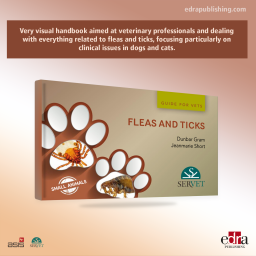
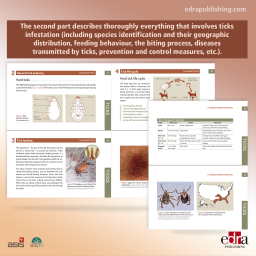
Very visual handbook aimed at veterinary professionals and dealing with everything related to fleas and ticks, focusing particularly on clinical issues in dogs and cats. The first part is entirely dedicated to fleas (including their identification, life cycle, clinical signs derived from flea infestation, flea allergy dermatitis (FAD), and prevention and control measures, among others). The second part describes thoroughly everything that involves ticks infestation (including species identification and their geographic distribution, feeding behaviour, the biting process, diseases transmitted by ticks, prevention and control measures, etc.).
Nowadays, patients not only require restoring an edentulous site, but they would like to smile again, have their self-confidence restored and express it in their social life, working life and spare time at their best. In the book you found a collection of anterior implant cases, where each aspect of the treatment is considered with a global approach. On this site you’ll find extraordinary video animations about: periodontal plastic surgery of the parabolas before the finalization of a case with a global approach to smiling; ridge preservation for restore 3D bone volumes in sites of high esthetic value; connective graft to increase vestibular volumes of peri-implant tissue and PubMed linked references.