The GAVeCeLT manual of...
The use of intravenous access devices is fundamental for all patients needing frequent blood sample collection, artificial nutrition, chemotherapy, antibiotic therapy, and any other intravenous treatment.
Active filters
The use of intravenous access devices is fundamental for all patients needing frequent blood sample collection, artificial nutrition, chemotherapy, antibiotic therapy, and any other intravenous treatment.
This book aims at providing an updated overview on the most frequent pathogens responsible for Porcine Respiratory Disease Complex (PRDC), viruses and bacteria, acting in association and mainly potentiating their anatomical and functional effects and worsening the clinical outcome and economic impact. The authors, prestigious and rewarded experts with a wide experience in respiratory diseases in pigs, have focused their efforts on preparing chapters that illustrate the latest information and data on the treated topics, while making them as readable as possible. The book inspires to facilitate comprehension and educational enrichment to the preparation of a well-designed, practical approach.
A visual guide with a strongly educational approach covering the main joints in the limbs of the dog. It shows the anatomical elements of each of these joints in three-dimensional diagrams. The views chosen for each case have been selected for a practical purpose, showing the position of the elements involved in the most commonly used surgical approaches. It also describes the key orthopaedic conditions affecting each joint and the most commonly used surgical approaches. It contains a large number of images and illustrations, and a selection of views presented in digital video format.
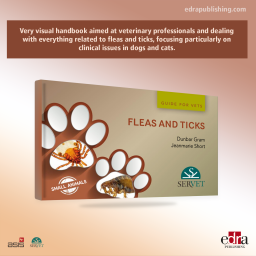
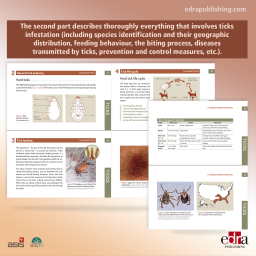
Very visual handbook aimed at veterinary professionals and dealing with everything related to fleas and ticks, focusing particularly on clinical issues in dogs and cats. The first part is entirely dedicated to fleas (including their identification, life cycle, clinical signs derived from flea infestation, flea allergy dermatitis (FAD), and prevention and control measures, among others). The second part describes thoroughly everything that involves ticks infestation (including species identification and their geographic distribution, feeding behaviour, the biting process, diseases transmitted by ticks, prevention and control measures, etc.).
This book has been created for everyone passionate about veterinary dermatology. Written by veterinary experts, this resource will explore the diagnostic thinking process. This practical book describes complex dermatological clinical cases through the evaluation of their clinical presentation, results of diagnostic procedures and treatment strategies. Fully illustrated with colour pictures, it also includes tables and clinical keys.