Good Practice and...
Professional responsibility, “good practice and malpractice” in obstetrics is one of the major areas of medical-legal litigation.
Filtres actifs
Professional responsibility, “good practice and malpractice” in obstetrics is one of the major areas of medical-legal litigation.
This handbook is intended to be a useful and practical tool primarily developed for pig production companies, as well as for veterinary practitioners faced with enteric disease affecting piglets in their first days of life. The contents are the result of the joint efforts of highly-regarded specialists with years of experience in the field of enteric diseases in swine..
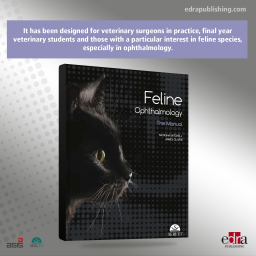
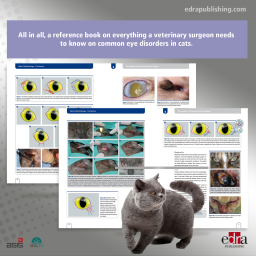
There is no doubt that cats are more and more popular as pets nowadays. It is therefore mandatory for veterinary surgeons to increase their knowledge on the diseases most frequently seen in feline practice. For that reason, the aim of this book is to provide the clinician with a visual guide to accurately diagnose and treat the most common ophthalmological eye disorders in cats. Feline Ophthalmology – The Manual is designed for veterinary surgeons in practice, final year veterinary students and those with a particular interest in feline species, especially in ophthalmology.
This atlas describes the avian necropsy technique in a detailed and systematic manner. It also provides information about the pathologies commonly observed in poultry at the slaughterhouse, as well as guidelines on how to collect samples for diagnostic tests. This updated edition includes, in addition to more than 200 images, explanatory videos to obtain the maximum diagnostic yield.
The goal of this work is to present the reader with the most common diseases that can produce immunosuppression in poultry, provide guidance for the diagnosis of immunosuppressive diseases, and examine the challenges that a diagnostician may face in confirming a diagnosis of immunosuppression. The book will feature an extensive collection of color photographs depicting gross and microscopic images.
Cet ouvrage explore la condition omnivore des humains, analyse les grands défis auxquels le monde est confronté pour éradiquer la faim, étudie la production de nourriture nécessaire à une population croissante, et ce, dans le respect que l’on doit au bien-être des animaux. Sans esquiver aucun sujet, comme l’expérimentation en laboratoire avec des êtres vivants, les vaccins ou l’alimentation des animaux domestiques, le livre approche les considérations éthiques avec rigueur et en s’appuyant sur la statistique. L’auteur, vétérinaire réputé et ami des animaux, passe en revue tous les points de vue aujourd’hui au cœur du débat sur l’animalisme.
Reasons to be OMNIVORE explores humans' omnivorous nature, analyzes the significant challenges in eradicating hunger and examines food production needed for a growing population while respecting animal welfare. The book does not exclude subjects such as laboratory experimentation on living beings, vaccines, or pet nutrition. It approaches ethical considerations with rigor, supported by statistics. The author, a renowned veterinarian and animal advocate, addresses the animal rights debate from multiple perspectives.