The GAVeCeLT manual of...
The use of intravenous access devices is fundamental for all patients needing frequent blood sample collection, artificial nutrition, chemotherapy, antibiotic therapy, and any other intravenous treatment.
Filtres actifs
The use of intravenous access devices is fundamental for all patients needing frequent blood sample collection, artificial nutrition, chemotherapy, antibiotic therapy, and any other intravenous treatment.
Small handbook gathering all the life cycles of the most common ectoparasites in dogs and cats. Similar parasites are grouped together based on their life cycle and, consequently, their sensitivity to parasiticides. The aim is to provide readers with key aspects of parasite control and prevention, highlighting those diseases that can be transmitted by them. Geographic distribution maps are also included.
This self-assessment manual allows veterinary surgeons and veterinary students to test their knowledge of small animal dermatology. The book presents a variety of different clinical cases, replete with images of affected patients and relevant data. Based on this information, the reader can identify the disease process in question in a simple and entertaining way, thus refreshing and expanding their knowledge of diagnosis and treatment.
Highly visual guide on how to diagnose alopecia in dogs and cats, in a structured and methodical manner, based on the distribution pattern and lesions. The large number of images, diagrams, tables and drawings, coupled with clear and practical descriptions, will allow readers to make the most of this work in day-to-day dermatology consultations.
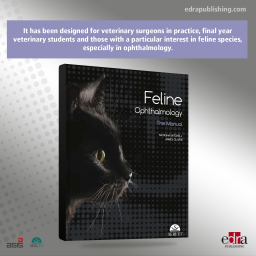
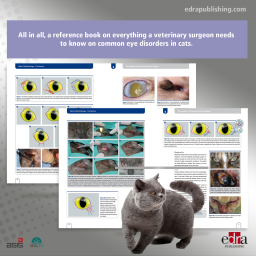
There is no doubt that cats are more and more popular as pets nowadays. It is therefore mandatory for veterinary surgeons to increase their knowledge on the diseases most frequently seen in feline practice. For that reason, the aim of this book is to provide the clinician with a visual guide to accurately diagnose and treat the most common ophthalmological eye disorders in cats. Feline Ophthalmology – The Manual is designed for veterinary surgeons in practice, final year veterinary students and those with a particular interest in feline species, especially in ophthalmology.
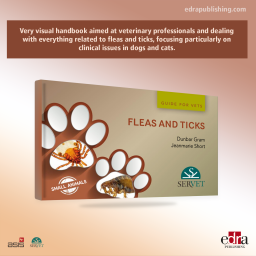
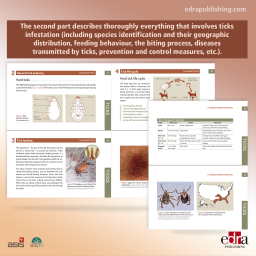
Very visual handbook aimed at veterinary professionals and dealing with everything related to fleas and ticks, focusing particularly on clinical issues in dogs and cats. The first part is entirely dedicated to fleas (including their identification, life cycle, clinical signs derived from flea infestation, flea allergy dermatitis (FAD), and prevention and control measures, among others). The second part describes thoroughly everything that involves ticks infestation (including species identification and their geographic distribution, feeding behaviour, the biting process, diseases transmitted by ticks, prevention and control measures, etc.).
This atlas describes the avian necropsy technique in a detailed and systematic manner. It also provides information about the pathologies commonly observed in poultry at the slaughterhouse, as well as guidelines on how to collect samples for diagnostic tests. This updated edition includes, in addition to more than 200 images, explanatory videos to obtain the maximum diagnostic yield.
The goal of this work is to present the reader with the most common diseases that can produce immunosuppression in poultry, provide guidance for the diagnosis of immunosuppressive diseases, and examine the challenges that a diagnostician may face in confirming a diagnosis of immunosuppression. The book will feature an extensive collection of color photographs depicting gross and microscopic images.
This volume of the Pet Owner Educational Atlas series covers the most frequent oral and dental pathologies seen in small animal practice. Pets with dental pathologies usually do not lose their appetite and owners often do not detect if their pet is suffering from oral discomfort or pain. Therefore, early diagnosis of dental pathologies is of vital importance. This book allows veterinarians to explain the importance of early diagnosis to owners, as well as details of their pet’s condition, its possible consequences, and the different treatment options available, among other relevant issues.