The GAVeCeLT manual of...
The use of intravenous access devices is fundamental for all patients needing frequent blood sample collection, artificial nutrition, chemotherapy, antibiotic therapy, and any other intravenous treatment.
Filtres actifs
The use of intravenous access devices is fundamental for all patients needing frequent blood sample collection, artificial nutrition, chemotherapy, antibiotic therapy, and any other intravenous treatment.
This practical book thoroughly reviews the current knowledge on salmonellosis in swine, and discusses the difficulty to control Salmonella spp. from a global perspective. It provides information about the actions that can be taken in order to reduce its incidence, with an emphasis on risk factors from feed manufacturing to carcass processing.
This book deals with pain in companion animals and how it affects their welfare, health and, of course, behaviour. It describes the difficulties encountered, throughout history, to finally reach the conclusion that animals and humans share the same neurophy- siological mechanisms to feel pain, and what their sensitive pathways are. It then goes deeper into the changes that pain can cause in the behaviour of dogs and cats and the tools available to the veterinary surgeon to control it.
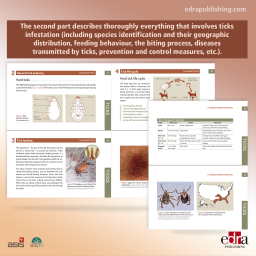
Very visual handbook aimed at veterinary professionals and dealing with everything related to fleas and ticks, focusing particularly on clinical issues in dogs and cats. The first part is entirely dedicated to fleas (including their identification, life cycle, clinical signs derived from flea infestation, flea allergy dermatitis (FAD), and prevention and control measures, among others). The second part describes thoroughly everything that involves ticks infestation (including species identification and their geographic distribution, feeding behaviour, the biting process, diseases transmitted by ticks, prevention and control measures, etc.).
Atlas complet et pratique, utile pour tous ceux qui débutent ou qui veulent approfondir les aspects différentiels du chat en tant que patient chirurgical. Il couvre les interventions chirurgicales les plus courantes chez les félins qui sont dûment expliquées par des photographies et des illustrations détaillées. Les auteurs ont de nombreuses années d’expérience dans la médecine et la chirurgie félines, et leur objectif est de transmettre leurs connaissances de la manière la plus pratique possible.
Contient :350 images, 250 illustrations, 18 vidéos.