
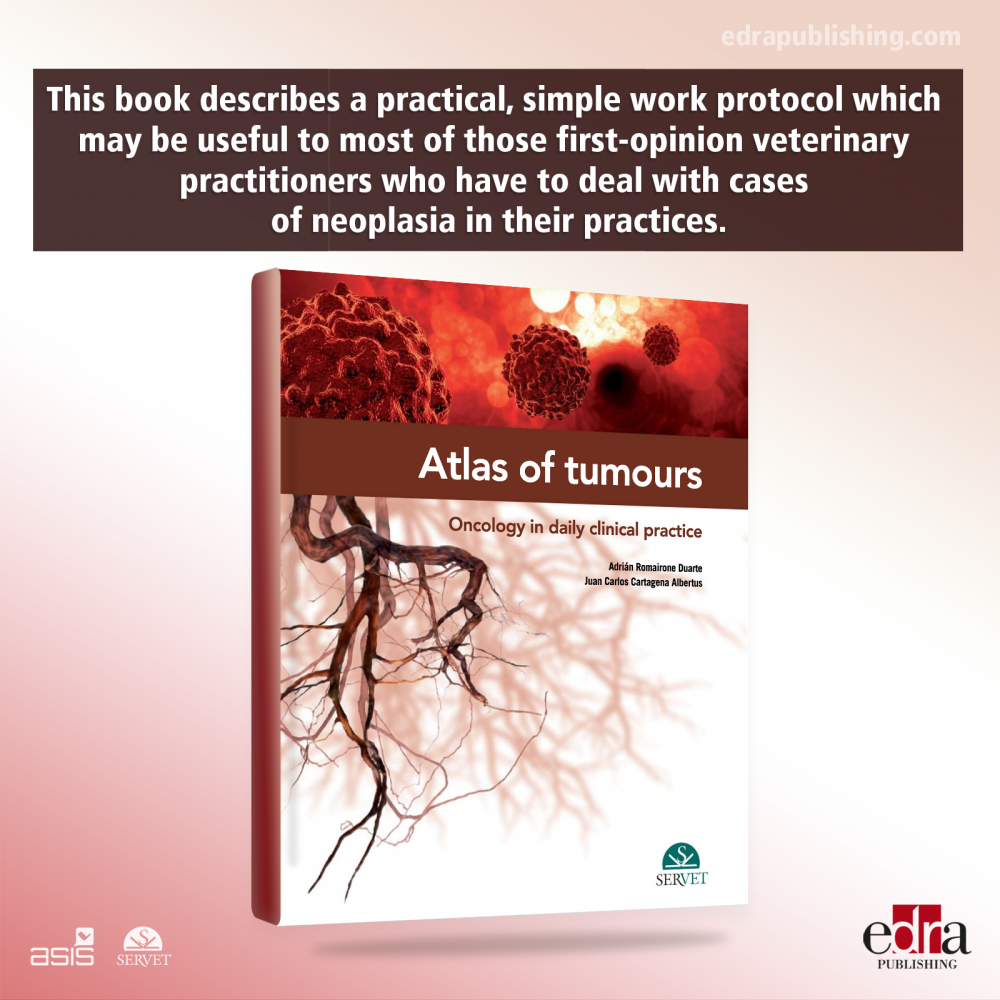


This book describes a practical, simple work protocol which may be useful to most of those first-opinion veterinary practitioners who have to deal with cases of neoplasia in their practices. It combines the experience in clinical oncology of a first-opinion veterinary surgeon and the knowledge of a veterinary practitioner specialized in this field, and includes a wide variety of images of the most common tumours in small animals as well as in exotic species. Some key aspects such as how to collect and send samples to the laboratory, and basic surgical techniques in oncology are also addressed.
This book describes a practical, simple work protocol which may be useful to most of those first-opinion veterinary practitioners who have to deal with cases of neoplasia in their practices. It combines the experience in clinical oncology of a first-opinion veterinary surgeon and the knowledge of a veterinary practitioner specialised in this field, and includes a wide variety of images of the most common tumours in small animals as well as in exotic species. Some key aspects such as how to collect and send samples to the laboratory, and basic surgical techniques in oncology are also addressed.
Authors
ADRIÁN DUARTE ROMAIRONE
Degree in Veterinary Medicine from the Faculty of Veterinary Sciences, General Pico, La Pampa, part of the National University of La Pampa (Argentina). Currently in the final stage of his PhD. Veterinary clinician since 1987. Owner of Centro de Diagnóstico Veterinario, which specializes in diagnosing diseases in companion animals and birds of prey. Owner and editor of the website www.diagnosticoveterinario.com. His areas of interest include clinical oncology, diagnostic cytology, soft tissue surgery, oncology and traumatology, with a particular focus on osteosynthesis by internal and external fixation, and medical and surgical pathology of birds of prey.
JUAN CARLOS CARTAGENA ALBERTUS
Degree in Veterinary Medicine, Zaragoza, 1987. Member of the Royal College of Veterinary Surgeons (RCVS), Master of Science (MSc), accredited by AVEPA in the fields of oncology and soft tissue surgery and university specialist in endoscopy and minimally invasive surgery (EAMIS). He is also a member of the European Society of Veterinary Oncology (ESVONC) and of the endoscopy, oncology and soft-tissue surgery working groups of AVEPA. He currently works at Night Vets Limited in Upminster, UK.
Table of contents
General aspects of clinical oncology
1. Basic principles of the diagnostic approach
Paraneoplastic syndromes
Clinical signs of suspected cancer
2. Sample collection and transport to the laboratory
Sample collection
Fixation and storage of the sample
3. Principles of surgical oncology
Safety margins
Surgical manipulation of the tumour
Cancer types by system
4. Tumours of the reproductive system in males and females
Female reproductive system: mammarytumours
Male reproductive system: testicular neoplasms
Male reproductive system: prostatic neoplasms
5. Skin tumours
Aetiology
Classification
Diagnostic approach in the clinic
Common skin tumours
6. Tumours of the digestive system
Oral malignancies
Gastric neoplasms
Intestinal neoplasms
7. Neoplasms of the eye and orbit
Neoplasms of the eyelids
Other neoplasms
Intraocular neoplasms
Orbital neoplasms
Mesenchymal tumours
Secondary intraocular tumours
Diagnostic investigation
Treatment
8. Neoplasms of the limbs.
Osteosarcoma
Aetiology
Clinical signs
Diagnosis
9. Neoplasms in non-traditional species
Common tumours in non-traditional species
10.Practical chemotherapy
Treatments
Side effects of chemotherapy
Fiche technique
Références spécifiques
In this book, the authors have tried to show, in a brief and practical manner, the basic principles and techniques that veterinary surgeons, nurses and students should know, master and improve to enhance the surgical care provided to their patients.The book features chapters about the different methods and techniques to control bacterial contamination and surgical infection, both in terms of the fight against microorganisms and the surgeons’ and assistants’ practices in the operating theatre.
Visual and technical atlas describing general concepts and details of the main diseases affecting horses. This atlas is designed as an aid to equine veterinarians who need to explain these concepts to horse owners in simple but precise terms.
The second edition of this educational atlas on cats expands on its initial goal of helping veterinary surgeons communicate with owners by adding to the content of the first edition with 16 new sheets. Needless to say that the previous topics have been revised and updated with the latest developments in each area.
The second edition of this educational atlas on dogs expands on its initial goal of helping veterinary surgeons communicate with owners by adding to the content of the first edition with 16 new sheets. Needless to say that the previous content has been revised and updated with the latest developments in each area.
This book describes a practical, simple work protocol which may be useful to most of those first-opinion veterinary practitioners who have to deal with cases of neoplasia in their practices. It combines the experience in clinical oncology of a first-opinion veterinary surgeon and the knowledge of a veterinary practitioner specialized in this field, and includes a wide variety of images of the most common tumours in small animals as well as in exotic species. Some key aspects such as how to collect and send samples to the laboratory, and basic surgical techniques in oncology are also addressed.


