
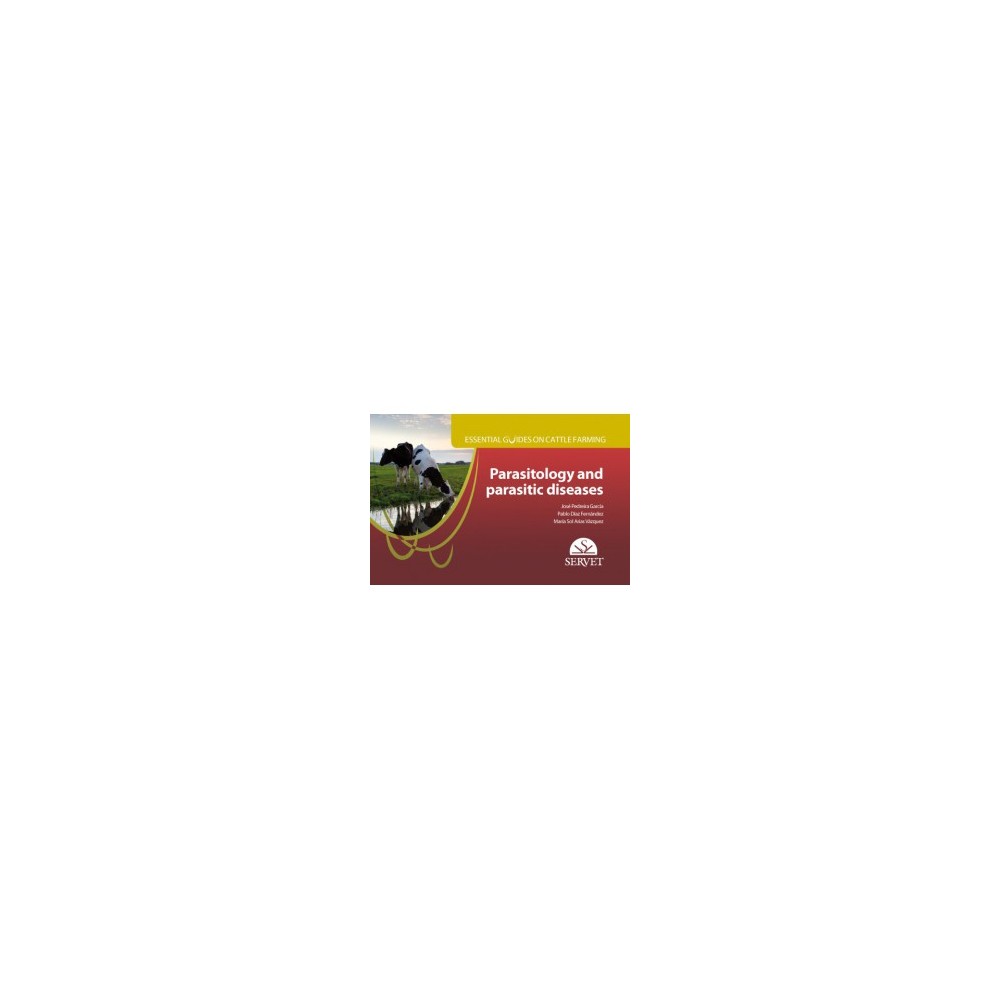


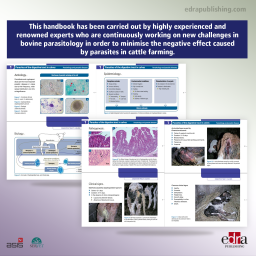
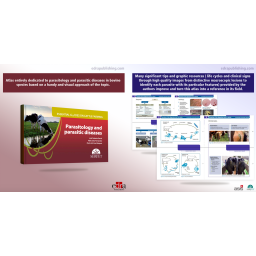
Handbook entirely dedicated to parasitology and parasitic diseases in bovine species based on a handy, visual approach of the topic. It includes the most essential contents and many significant tips and graphic resources (life cycles, clinical signs, diagnosis, treament guidelines, etc.) to turn this atlas into a reference in its field.
Handbook entirely dedicated to parasitology and parasitic diseases in bovine species based on a handy, visual approach of the topic. It includes the most essential contents and many significant tips and graphic resources (life cycles, clinical signs, diagnosis, treament guidelines, etc.) to turn this atlas into a reference in its field.
Authors:
JOSÉ PEDREIRA GARCÍA
He carries out his research work at the Department of Animal Pathology of the School of Veterinary Medicine of Lugo (USC). Author of numerous scientific articles in specialized national and international journals, as well as of articles for the general public.
PABLO DÍAZ FERNÁNDEZ
He works as a Professor for the USC and teaches and researches at the Department of Animal Pathology.
MARÍA SOL ARIAS VÁZQUEZ
She currently works as a researcher within the Isidro Parga Pondal Programme (Government of Galicia) and teaches and researches at the Department of Animal Pathology of the School of Veterinary Medicine of Lugo (USC).
KEY FEATURES:
➜ Written by renowned experts in this field
➜ With high quality images and graghic resources.
➜ Includes the most updated and essential contents on the topic parasitic disesases.
Table of Contents:
1. Parasites of the digestive tract in calves
2. Parasites of the digestive tract in adults
3. Blood parasites
4. Parasites affecting reproduction
5. Skin parasites
6. Other parasitic infections
7. Diagnosis
8. Treatment
9. References
Fiche technique
Références spécifiques
This guide describes the main events that take place during the dry period, both in the udder and in the cow, and shows how they can influence the subsequent lactation period. The book also provides basic guidelines for a proper drying-off technique and management of cows during this period in order to reduce the prevalence of intramammary infections and achieve optimal milk production.
This book serves as a useful tool for learning about the most common diseases of tilapia (both red and Nile) raised in intensive and semi-intensive systems. It covers both macroscopic and microscopic lesions as well as elements of production and parameters of water quality which are critical to determining the health and disease of these fish.
Infectious bronchitis is an acute and highly contagious respiratory disease of chickens characterized by respiratory signs comprising gasping, coughing, sneezing, tracheal rales and nasal discharge. In addition, severe respiratory distress may occur in young chickens. Respiratory distress, decrease in egg production, and loss of internal egg quality and eggshell quality have been reported in layers. Some strains of the virus produce severe kidney damage and may be associated with high mortality.
The cow’s peripartum period from a practical and dynamic point of view, explained through theoretical explanations and a huge collection of clinical cases. Normally, disorders or conditions occurring in the peripartum period are not independent events; they are the result of the interaction of several events occurring over time. The authors highlight here the importance of assessing bovine pathologies as a whole. It is the only manner for the clinician to anticipate conditions that may appear during the peripartum period.
Handbook entirely dedicated to parasitology and parasitic diseases in bovine species based on a handy, visual approach of the topic. It includes the most essential contents and many significant tips and graphic resources (life cycles, clinical signs, diagnosis, treament guidelines, etc.) to turn this atlas into a reference in its field.


