The GAVeCeLT manual of...
The use of intravenous access devices is fundamental for all patients needing frequent blood sample collection, artificial nutrition, chemotherapy, antibiotic therapy, and any other intravenous treatment.
Active filters
The use of intravenous access devices is fundamental for all patients needing frequent blood sample collection, artificial nutrition, chemotherapy, antibiotic therapy, and any other intravenous treatment.
Small handbook gathering all the life cycles of the most common ectoparasites in dogs and cats. Similar parasites are grouped together based on their life cycle and, consequently, their sensitivity to parasiticides. The aim is to provide readers with key aspects of parasite control and prevention, highlighting those diseases that can be transmitted by them. Geographic distribution maps are also included.
This practical book thoroughly reviews the current knowledge on salmonellosis in swine, and discusses the difficulty to control Salmonella spp. from a global perspective. It provides information about the actions that can be taken in order to reduce its incidence, with an emphasis on risk factors from feed manufacturing to carcass processing.
Chronic valvular disease (CVD) is the most common heart disease seen in veterinary practice. Three of every four dogs with heart disease presented at the clinic have CVD; one of every four elderly dogs has it. This clear and simple visual guide provides all the tools that a general practitioner needs to treat this disease successfully.
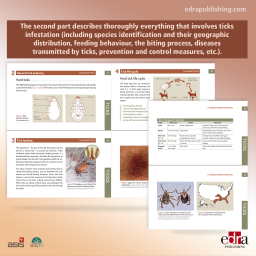
Very visual handbook aimed at veterinary professionals and dealing with everything related to fleas and ticks, focusing particularly on clinical issues in dogs and cats. The first part is entirely dedicated to fleas (including their identification, life cycle, clinical signs derived from flea infestation, flea allergy dermatitis (FAD), and prevention and control measures, among others). The second part describes thoroughly everything that involves ticks infestation (including species identification and their geographic distribution, feeding behaviour, the biting process, diseases transmitted by ticks, prevention and control measures, etc.).
The most updated information on avian influenza with a practical approach. The authors review the aetiology, clinical signs, diagnosis, and control of avian influenza viruses. It also includes numerous graphic resources to make the contents more understandable to readers.
Infectious bronchitis is an acute and highly contagious respiratory disease of chickens characterized by respiratory signs comprising gasping, coughing, sneezing, tracheal rales and nasal discharge. In addition, severe respiratory distress may occur in young chickens. Respiratory distress, decrease in egg production, and loss of internal egg quality and eggshell quality have been reported in layers. Some strains of the virus produce severe kidney damage and may be associated with high mortality.