The GAVeCeLT manual of...
The use of intravenous access devices is fundamental for all patients needing frequent blood sample collection, artificial nutrition, chemotherapy, antibiotic therapy, and any other intravenous treatment.
Active filters
The use of intravenous access devices is fundamental for all patients needing frequent blood sample collection, artificial nutrition, chemotherapy, antibiotic therapy, and any other intravenous treatment.
The ten chapters of the volume answer these ten fundamental questions and the clinician who faces an apical pathology of endodontic origin will therefore have the solutions. The aim of this text/atlas is to provide a guide to the diagnostic approach and to the execution of endodontic retreatments of complex cases.
Small handbook gathering all the life cycles of the most common ectoparasites in dogs and cats. Similar parasites are grouped together based on their life cycle and, consequently, their sensitivity to parasiticides. The aim is to provide readers with key aspects of parasite control and prevention, highlighting those diseases that can be transmitted by them. Geographic distribution maps are also included.
This practical book thoroughly reviews the current knowledge on salmonellosis in swine, and discusses the difficulty to control Salmonella spp. from a global perspective. It provides information about the actions that can be taken in order to reduce its incidence, with an emphasis on risk factors from feed manufacturing to carcass processing.
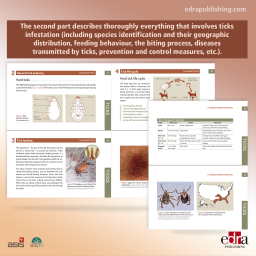
Very visual handbook aimed at veterinary professionals and dealing with everything related to fleas and ticks, focusing particularly on clinical issues in dogs and cats. The first part is entirely dedicated to fleas (including their identification, life cycle, clinical signs derived from flea infestation, flea allergy dermatitis (FAD), and prevention and control measures, among others). The second part describes thoroughly everything that involves ticks infestation (including species identification and their geographic distribution, feeding behaviour, the biting process, diseases transmitted by ticks, prevention and control measures, etc.).
Presentation Seizure disorders are common in small animal practice. The purpose of this book is to provide a comprehensive, evidence-based resource to assist in the successful management of recurrent seizures in dogs and cats. The book’s format is designed to present a logical, clinically relevant approach to a seizure patient, with detailed information on the broad range of topics involved in the diagnosis and treatment of seizure disorders. The clinical and diagnostic approach to the seizure patient is discussed in depth, with dedicated chapters on idiopathic epilepsy in dogs, the genetics of epilepsy, feline epilepsy, quality of life, advanced imaging and electroencephalography.