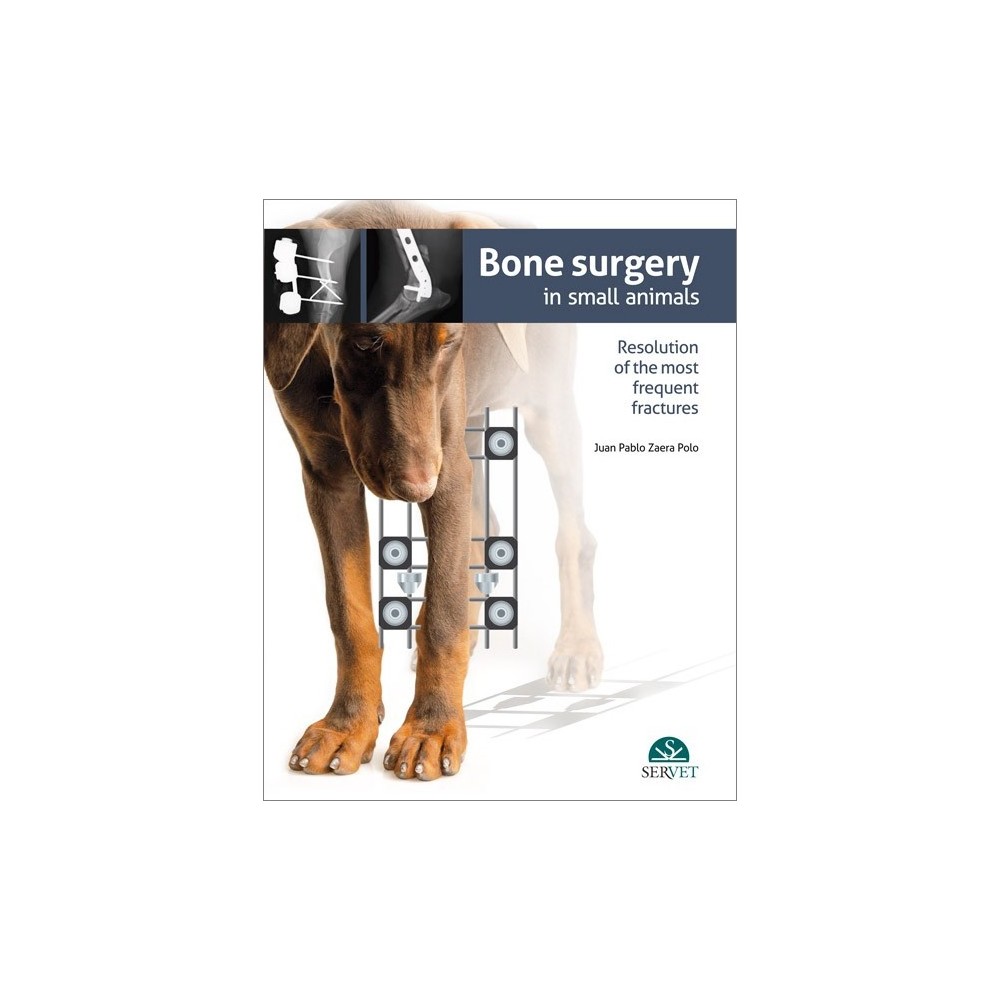


In this book, the most common fractures in the canine species and the way to solve them by osteosynthesis are described. The first six chapters are devoted to the general aspects of bone growth and healing, the following chapters set out the various alternatives to address fractures and the different applicable osteosynthesis systems.
In summary, this book, thanks to its structure, the tremendous amount of graphic material that it provides, the comprehensible language, and its eminently practical focus, is of great use to both veterinary students as well as professional veterinarians specialized in traumatology, which they will surely use to streamline their decision making in their daily traumatology practice.
This book is an excellent contribution to orthopedic literature and osteosynthesis.
This book is structured in two parts. In the first part (chapter 1-6), the characteristic of the bone tissue, as well as the principal basic osteosynthesis techniques, are described thoroughly. A large number of figures, carefully selected and designed, that accompany each osteosynthesis system, combined with the real, intra-operatory images, perfectly illustrate the operating bases and the steps to be followed for the correct use and application of each technique. Along with classical techniques, novel traumatology treatments are also included.
The study of the primary errors that can be committed with each system may also be of great use and how to avoid and correct them. The x-ray material, carefully selected, enables the reader to visually understand which fixation system or implant can or should be used in each case.
This first part of the book permits both veterinarian students as well as professionals to increase their knowledge in veterinary traumatology.
The second part of the book (chapter 7-10) focuses on the in-depth study of each bone's characteristics, emphasizing their anatomical and biomechanical peculiarities. From the beginning, the possible treatments that can be applied in each case and the factors that should be taken into account for their proper selection are ties together in a simple and didactic manner. Each type of fracture is dealt with by assessing the bone's characteristics and location, taking into consideration other factors that may orient the surgeon towards the most suitable system for its treatment. The graphic material, in part, also makes it easy to understand the information presented.
In summary, this book, thanks to its structure, the tremendous amount of graphic material that it provides, the comprehensible language, and its eminently practical focus, is of great use to both veterinary students as well as professional veterinarians specialized in traumatology, which they will surely use to streamline their decision making in their daily traumatology practice.
The author
Juan Pablo Zaera Polo
Degree in Veterinary Sciences at the Universidad Complutense de Madrid (UCM) in 1988. Intern of the Deutscher Akademischer Austauschdienst (German Academic Exchange Service, DAAD ) in Hanover during the 1989-90 school year. In 1993, he received the title of Doctor from the Universidad Complutense de Madrid, where he worked as a professor. He has carried out various residencies in the Clínica Quirúrgica of Munich and in the Orthopaedics Department of the University of Michigan. Juan Pablos has collaborated in the publication of several books, monographs, and articles, and has participated in various national and international speeches at conferences, courses, and workshops. He is a member of the Scientific Committee of the GE VO and AO -Vet. Currently, he is a professor of Surgery at the School of Veterinary Sciences of the Universidad de Las Palmas de Gran Canaria (ULPGC) and Head of the Traumatology, Arthroscopy
Table of contents:
1. Bone tissue
General information
Function
Structure
Vascular supply
2. Bone growth and healing
Bone growth
Bone healing
3. Classification of fractures
Soft tissue involvement
Number of fragments
Direction of the fracture plane
Metaphyseal and epiphyseal fractures
Joint fractures
4. Bone stimulation
Bone transplants
Types of bone transplants
BMP or PRP grafts. Pins, rush pins, Kirschner pins
5. Osteosynthesis systems and biomechanics
Biomechanics and their application in different osteosynthesis systems
Cerclages
Tension band pin system
External fixators
Screws
Plates
6. Complications in the bone healing process
Fracture disease
Contracture of the quadriceps muscle
Delayed union – non union
Defective consolidation (malunion)
Osteomyelitis
7. Head fractures
Cranial fractures
Fractures of the zygomatic arch
Fractures of the jaw
8. Forelimb fractures
Scapular fractures
Fractures of the humerus
Fractures of the radius and ulna
Carpal fractures
Fractures of the metacarpus and the metatarsus
9. Hind limb fractures
Hip fractures
Femur fractures
Fractures of the tibia and fibula
Tarsal fractures
Data sheet
Specific References
This book is unique, developed by the main worldwide experts in this issue. It is an extremely valuable tool for any veterinary practitioner willing to deepen into physiopathology, clinical signs, diagnosis, treatment and prognosis of feline endocrine diseases, with an approach and contents never published so far. the most common endocrine conditions in cats are deeply discussed and addressed: hyperthyroidism, type-II diabetes mellitus, and growth hormone excess.
A practical and simple manual on the methods and techniques to measure blood pressure in cats and dogs, how to interpret the results obtained, and the recommended treatments. It includes a brief review of the current official recommendations of the American College of Veterinary Internal Medicine (ACVIM), with clear rules and guidelines.
This practical guide provides updated information about the infectious diseases that most commonly affect dogs, diagnostic approaches, treatments, vaccinations programmes and recommendations, etc., all described from a highly practical point of view.
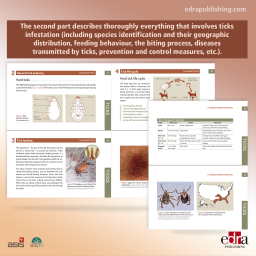
Very visual handbook aimed at veterinary professionals and dealing with everything related to fleas and ticks, focusing particularly on clinical issues in dogs and cats. The first part is entirely dedicated to fleas (including their identification, life cycle, clinical signs derived from flea infestation, flea allergy dermatitis (FAD), and prevention and control measures, among others). The second part describes thoroughly everything that involves ticks infestation (including species identification and their geographic distribution, feeding behaviour, the biting process, diseases transmitted by ticks, prevention and control measures, etc.).
Presentation Seizure disorders are common in small animal practice. The purpose of this book is to provide a comprehensive, evidence-based resource to assist in the successful management of recurrent seizures in dogs and cats. The book’s format is designed to present a logical, clinically relevant approach to a seizure patient, with detailed information on the broad range of topics involved in the diagnosis and treatment of seizure disorders. The clinical and diagnostic approach to the seizure patient is discussed in depth, with dedicated chapters on idiopathic epilepsy in dogs, the genetics of epilepsy, feline epilepsy, quality of life, advanced imaging and electroencephalography.
In this book, the most common fractures in the canine species and the way to solve them by osteosynthesis are described. The first six chapters are devoted to the general aspects of bone growth and healing, the following chapters set out the various alternatives to address fractures and the different applicable osteosynthesis systems.
In summary, this book, thanks to its structure, the tremendous amount of graphic material that it provides, the comprehensible language, and its eminently practical focus, is of great use to both veterinary students as well as professional veterinarians specialized in traumatology, which they will surely use to streamline their decision making in their daily traumatology practice.