Direct Microscopy in...
Fresh, direct, and phase-contrast microscopy is an easy-to-perform, replicable, and economical diagnostic technique included in the guidelines of the Centers of Disease Control of Atlanta in 2015
Filtres actifs
Fresh, direct, and phase-contrast microscopy is an easy-to-perform, replicable, and economical diagnostic technique included in the guidelines of the Centers of Disease Control of Atlanta in 2015
This notebook includes drawings of the anatomical structures, most frequent ailments and some of the most commonly used surgical techniques in dogs and cats. Its purpose is to facilitate communication between vets and their clients, since it will enable them to explain graphically what is happening to the pet, where, and the procedure for the possible resolution of the problem.
This publication explains step by step how to approach and carry out caudal abdomen surgeries, by means of photos, diagrams and real clinical cases. Real clinical cases are described, showing the most appropriate surgical interventions for each of them.. Essential both for practicing professionals and students of veterinary surgery.
Photographs, diagrams and real clinical cases explain, step by step, the methods of approach and resolution for the main surgical interventions in the rectal, anal and perineal zones. An essential work for both practicing professionals and surgery students.
This book offers essential information about how to obtain samples for routine clinical and pathological investigations veterinarians habitually follow in pig farms. In addition, a complete and easy-to-perform necropsy procedure is shown. Picture galleries illustrate these procedures in a very easy way to follow. The guide also contains a set of pictures representing the main pathologies veterinarians can find in their practice. The guide is very visual and literature is reduced in order to facilitate the use of the book. This design, together with the book format and binding makes this guide very easy to use in practice by veterinarians and farm workers.
Twenty per cent of visits to the vet may be due to otitis and, although in general they do not represent a serious condition for the animal, they may become very insidious processes if they are not treated suitably. This work presents a selection of clinical cases to help vets to establish the proper guidelines for treatment, management and control.
Photography for me is different than some other facets of dentistry. It has a power that is unspoken and transformative. With just a visual image, you can change the mind-set of a patient and elicit emotion from both the subject and the photographer. It is art. It is dynamic. It is simple. It is complex. It is powerful.
Help your patients to smile with confidence. This non-formulaic focus on Smile Design offers a “how-to” approach to patient communication surrounding the art of smile analysis, the treatment planning process, and case presentation. Read it again and again as you master each step of smile creation at your own pace. This tried and tested method will transition your dental practice from a singletooth method toward full-mouth care.
Finally, a book that breaks down the entire veterinary practice model into its individual components. The retooled and redesigned model will show to the practice owner or manager how shift from activity to productivity, how to harness team's members personal talents, how to motivate clients to come in for service. Enclosed to the book there are supporting materials downloadable and a 6-part audio course: Taking charge of your client experience.
The good news is that it doesn’t have to remain a mystery. The goal of this book is to help dentists who are looking to demystify the dental marketing process, and those in need of more new patients, regardless of whether you are a marketing director for a current practice or a dentist yourself, a solo practitioner, or one in a group practice, or someone who is in-network with dental insurance companies or completely out of network with them.
The problem-oriented approach is recommended by the College of Internal Medicine to address and resolve medical problems. Hence the idea of a book based on algorithms that guide the reader step-by-step with logical, practical, cost-effective options to proceed from a general concern, laboratory abnormality, or imaging finding to a specific diagnosis or treatment. Moreover, comprehensive notes, linked to the algorithms by references, give more details regarding a specific diagnostic investigation, a particular disease or the therapy recommended.
This visual atlas takes a trip through the digestive system, describing general concepts of its anatomy and physiology. It covers the diagnostic and therapeutic approach to common disorders of the gastrointestinal tract, hepatobiliary tract, and pancreas. Enriched with simple, yet comprehensive illustrations, it serves as a tool to facilitate communication between veterinarians and pet owners.
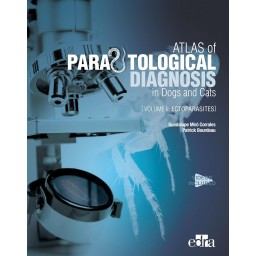
An up-to-date descriptive atlas on the diagnosis of the main types of ectoparasitosis in dogs and cats. It covers the most relevant aspects of each parasite, using graphical resources to help identify these pathogens and decide on the actions to take in each case. The work is complemented with QR links to videos of collecting and processing samples and the visualization of some of these parasites under the microscope.
The new groundbreaking VIMS - Veterinary Internal Medicine Series carries the veterinarians in a transformative journey through the dynamic world of veterinary internal medicine. Arising from a profound understanding of the complexities veterinarians face, each book concentrates on a specific organ system in either dogs or cats, offering unparalleled insights that surpass traditional veterinary resources. Every book in this series offers a clear path to learning current opinions on pathophysiology, diagnosis, treatment, prognosis, and costs associated with illnesses.
Reasons to be OMNIVORE explores humans' omnivorous nature, analyzes the significant challenges in eradicating hunger and examines food production needed for a growing population while respecting animal welfare. The book does not exclude subjects such as laboratory experimentation on living beings, vaccines, or pet nutrition. It approaches ethical considerations with rigor, supported by statistics. The author, a renowned veterinarian and animal advocate, addresses the animal rights debate from multiple perspectives.