


This is a pioneering book in veterinary medicine. The reader will be able to visualize what really is happening in a diseased heart. Through three-dimensional representation and augmented reality; every disorder can be seen, almost touching the 3D model above the book. The pathologies' changes in blood flow can be visualized, bringing the reader even closer to the pathophysiological reality. The text addresses the major points of pathophysiology and diagnostic keys for the most common diseases, and the illustrations and pictures are a bridge between the 3D models and the text. Thus, the book succeeds in joining diagnosis, particularly a test such as echocardiography, to understand the pathophysiology.
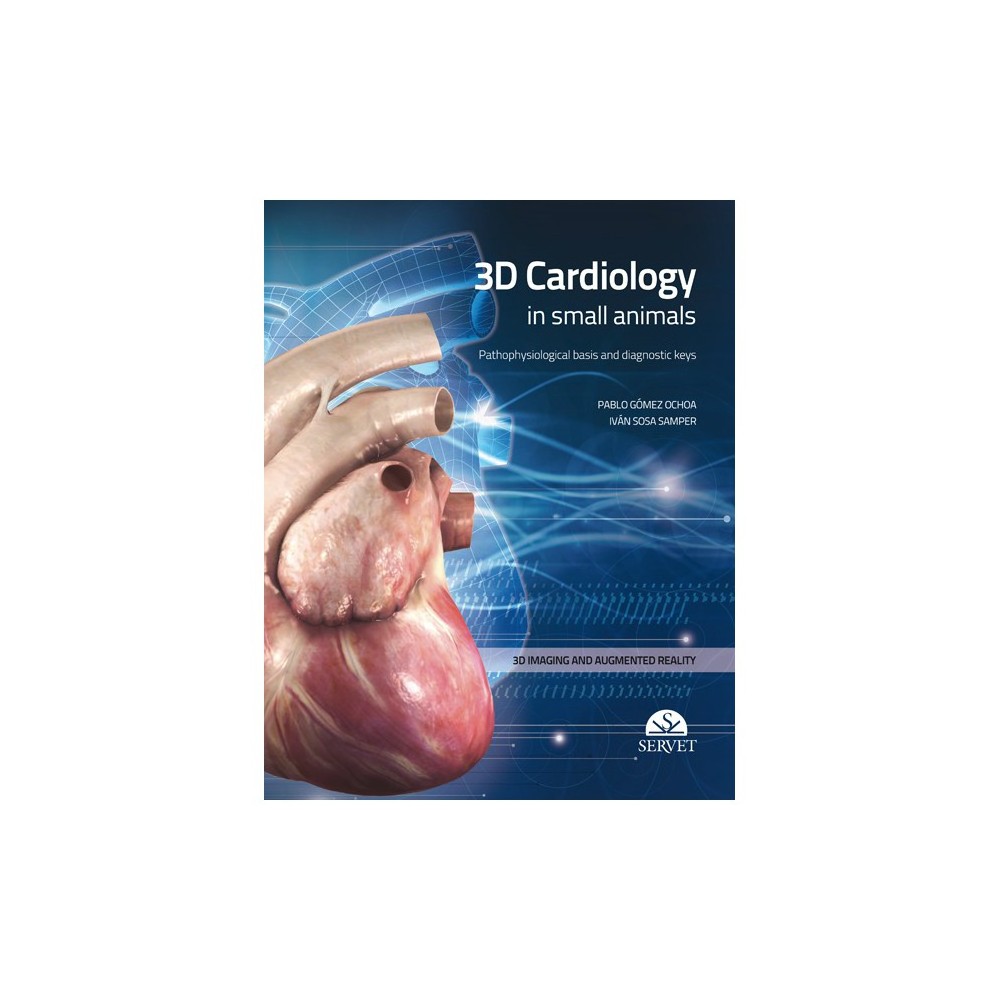
A guide in which the main cardiac diseases in the dog and cat are represented in a very visual manner. Vets will be able to use this guide both as a reference and as an aid to explain diseases to pet owners. The graphic material consists of 3D illustrations, augmented reality, and diagnostic imaging pictures.
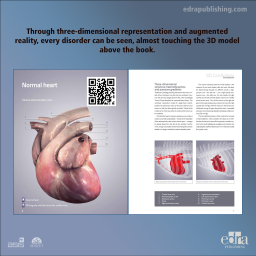
This is a pioneering book in veterinary medicine. The reader will be able to visualize what really is happening in a diseased heart. Through three-dimensional representation and augmented reality; every disorder can be seen, almost touching the 3D model above the book. The pathologies' changes in blood flow can be visualized, bringing the reader even closer to the pathophysiological reality.
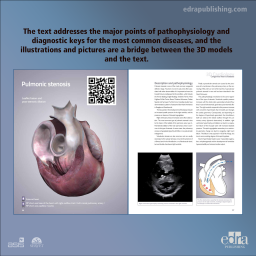
The text addresses the major points of pathophysiology and diagnostic keys for the most common diseases, and the illustrations and pictures are a bridge between the 3D models and the text. Thus, the book succeeds in joining diagnosis, particularly a test such as echocardiography, to understand the pathophysiology.
"Since I started learning echocardiography, I translated what I see on the screen, along with the findings of the X-ray and the ECG, into an internal three-dimensional model that I used to create a comprehensive picture of the clinical condition of the patient. Being able to see how, throbbing in front of me, generates endless emotions. The first and most important is the play instinct. I try to stroke it with my extended fingers, I try to penetrate it from the pulmonary vein, and I turn and bend the sheet watching the model changes with a giggle. I think any creative idea that materializes is cause for celebration, but for me, the design of this heart and being able to see it beating thanks to Pixeldreams modeling and the support of Grupo Asis is a unique moment. However, the same question is repeated from the moment I see this heart beating: will this model, together with the text and illustrations, teach anything? We will see whether augmented reality is an artifice in the history of technology or whether it really represents a change in the way we teach. I believe that material with soul and passion always transmits something. So I bet that this book will make the reader internalize the pathology, visualizing the pathophysiology, and overcoming the hurdle that the study from two-dimensional media, such as photographs of X-rays or ultrasounds, represents.".
Pablo Gómez Ochoa, Author
Authors
Pablo Gómez Ochoa
He graduated from the University of Zaragoza in 2000, and completed his PhD at the same institution in 2004. He obtained a national and an international award for his PhD research, and has published over 20 scientific articles in international journals. He has been a speaker at over 50 CE courses, and at national and international conferences. He has done external rotations on ultrasonography in human hospitals, and in the Animal Health Trust. In 2006, he was a Visiting Professor at The Ohio State University and Kansas State University Colleges of Veterinary Medicine. In 2010 he was a Visiting Professor at the Universita di Sassari in Italy. In his field, Dr. Gómez Ochoa developed a technique utilizing contrast material to identify portosystemic shunts, and adapted the use of semiquantitative Doppler studies to evaluate intraabdominal lymphadenopathy.
He is currently Professor, part-time, at the University of Zaragoza, and is researching novel contrast agents and additional application of Doppler in various clinical conditions. In 2012, he co-founded Vetoclock.com with Guillermo Couto.
Ivan Sosa
He obtained is DVM degree in 2007 from the University of Zaragoza. He worked for a year in a small animal practice in Valencia while at the same time offering mobile ultrasound services to other veterinary clinics. He later worked for a year in a small animal hospital in Oxford, UK, in the Cardiology and Ultrasound Department. In 2009, he completed a small animal internship at the Bristol University, working then in the Cardiology department of the university and as a sonographer at Great Western referrals, centre of excellence in Swindon, UK.
He has published science articles and communications in national and international conferences, and participated in ultrasonography courses in Spain and the UK. Since 2012, Ivan started a combined cardiology residency PhD programme. His research topic involves stem cell and resynchronisation therapy in dilated cardiomyopathy.
Table of contents
Introduction
Normal heart
Longitudinal section
Three-dimensional anatomy and sonographic correlation
Pathophysiology of heart failure
Cardiac remodeling. Pressure overload
Volume overload
Acquired heart diseases
Myxomatous mitral valve disease
Canine dilated cardiomyopathy
Feline hypertrophic cardiomyopathy
Endocarditis
Feline restrictive and unclassified cardiomyopathy
Arrhythmogenic right ventricular cardiomyopathy
Cardiac neoplasms
Pericardial effusion and cardiac tamponade
Congenital heart diseases
Patent ductus arteriosus (PDA)
Patent and reversed ductus arteriosus
Pulmonic stenosis
Aortic stenosis
Ventricular septal defect (VSD)
Tricuspid dysplasia and Ebstein's anomaly
Mitral dysplasia
Tetralogy of Fallot
Atrial septal defect
Peritoneopericardial diaphragmatic hernia
Fiche technique
Références spécifiques
Presentation Seizure disorders are common in small animal practice. The purpose of this book is to provide a comprehensive, evidence-based resource to assist in the successful management of recurrent seizures in dogs and cats. The book’s format is designed to present a logical, clinically relevant approach to a seizure patient, with detailed information on the broad range of topics involved in the diagnosis and treatment of seizure disorders. The clinical and diagnostic approach to the seizure patient is discussed in depth, with dedicated chapters on idiopathic epilepsy in dogs, the genetics of epilepsy, feline epilepsy, quality of life, advanced imaging and electroencephalography.
This illustrated work aims at helping veterinary surgeons to communicate with pet owners. After the previous volume about surgery, this atlas dedicated to dermatology helps the vet to explain the physiological and pathological characteristics of skin as well as the characteristics of diagnostic tests, treatments and surgical techniques. Every illustration describes the clinical aspects of the dermatology consultation: anatomical and physiological considerations about the skin and its adnexa, and graphic descriptions of infectious, inflammatory, endocrine, allergic or tumoral diseases. The clarity and accuracy of the illustrations turn this atlas into another useful clinical tool.
Dental care is essential to prevent dental and oral health problems in dogs. It is nowadays a routine procedure for most veterinary practices. However, some dental pathologies are sometimes really difficult to diagnose and treat. With almost 400 high-quality images, clear anatomical illustrations, and descriptions of numerous diagnostic tests, this atlas constitutes a reference handbook for a quick visual identification with a clear orientation towards a precise diagnosis and treatment. In short, this is an essential tool for a better understanding of dental pathologies in dogs.
Small handbook gathering all the life cycles of the most common ectoparasites in dogs and cats. Similar parasites are grouped together based on their life cycle and, consequently, their sensitivity to parasiticides. The aim is to provide readers with key aspects of parasite control and prevention, highlighting those diseases that can be transmitted by them. Geographic distribution maps are also included.
This is a pioneering book in veterinary medicine. The reader will be able to visualize what really is happening in a diseased heart. Through three-dimensional representation and augmented reality; every disorder can be seen, almost touching the 3D model above the book. The pathologies' changes in blood flow can be visualized, bringing the reader even closer to the pathophysiological reality. The text addresses the major points of pathophysiology and diagnostic keys for the most common diseases, and the illustrations and pictures are a bridge between the 3D models and the text. Thus, the book succeeds in joining diagnosis, particularly a test such as echocardiography, to understand the pathophysiology.


