Good Practice and...
Professional responsibility, “good practice and malpractice” in obstetrics is one of the major areas of medical-legal litigation.
Filtres actifs
Professional responsibility, “good practice and malpractice” in obstetrics is one of the major areas of medical-legal litigation.
The use of intravenous access devices is fundamental for all patients needing frequent blood sample collection, artificial nutrition, chemotherapy, antibiotic therapy, and any other intravenous treatment.
The common idea that edentulism can always be solved with implants is questioned in this book given that the most recent literature highlights the higher risk of implant prosthodontics than traditional conventional toothborne prosthodontics. This book represents a procedural guide to the fabrication of full veneer crowns with vertical margin design. The preparation of the natural tooth as a prosthetic pillar is certainly a “traditional” procedure that is still one of the most common activities that dentists perform today and the so-called “vertical” preparation is given full credit in this book.
This book highlights all the medical aspects that the veterinary practitioner should bear when dealing with a senior feline patient. The key points of each system and disease are addressed clearly. The practical application of the information provided is the book's main asset, always from the perspective of their physiological peculiarities and response to the treatment.
This book deals with the main orthopaedic conditions of the stifle joint in dogs and cats, so veterinary surgeons can assess, diagnose and treat the disorders commonly seen in their practice. It is intended to help veterinary clinicians make a correct diagnosis and prognosis and establish the most appropriate drug or surgical treatment for each case. Orthopaedic pathologies of the stifle joint contains plenty of high-quality images and illustrations as well as links to videos through QR codes, which provide additional information and contribute to making the book even more practical.
In this book, the most common fractures in the canine species and the way to solve them by osteosynthesis are described. The first six chapters are devoted to the general aspects of bone growth and healing, the following chapters set out the various alternatives to address fractures and the different applicable osteosynthesis systems.
In summary, this book, thanks to its structure, the tremendous amount of graphic material that it provides, the comprehensible language, and its eminently practical focus, is of great use to both veterinary students as well as professional veterinarians specialized in traumatology, which they will surely use to streamline their decision making in their daily traumatology practice.
After providing a comprehensive review of the fundamental aspects of farrowing (physiology, facilities, organization, etc.) in the first volume, in this second volume, the authors focus on the next phase, lactation. From the technical and physiological aspects that affect both the mother and the piglet, to production targets, feeding, health programs on the farm, or personnel management. These are topics that will undoubtedly be helpful in the daily practice of professional veterinary surgeons. As in the previous volume, the authors have achieved a very practical book with rigorous contents, based on their experience and technical literature, accompanied by a large amount of visual material to complement the information given.
Artificial insemination (AI) is an indispensable technique on swine farms, and its success depends primarily on semen quality. This handbook covers the key steps necessary to obtain high-quality processed semen and ensure successful AI. Essential practical considerations are clearly detailed in each chapter.
The objective of this guide is to provide a practical summary regarding current knowledge and understanding of porcine reproductive and respiratory syndrome (PRRS). The information presented is focused on clinically relevant and practical information to help field veterinary surgeons and farm team personnel interested in animal health.
Technical work mainly focused on the management of pig farms working with hyperprolific genetics, which almost completely monopolize the market in this species in both productive and reproductive terms. The author, a renowned experienced specialist in swine genetics, provides key information to facilitate the management of these lines by veterinary professionals.
This innovative book presents the essential aspects of bovine immunology and provides key information about the main vaccine-preventable diseases in cattle and vaccination and disease control procedures. The detailed illustrations and diagrams will help veterinary practitioners consolidate their knowledge in this field.
This atlas is aimed at bovine medicine practitioners to provide them with an easy to use visual reference of the main pathologies and disorders present in this species. A wide range of the most common diseases and disorders of cattle are illustrated, grouped by organic system and anatomic location, along with a brief description of the aetiology and pathology of each. The atlas includes the main disorders of cattle including congenital malformations, skin disorders, gastrointestinal, cardiovascular and respiratory conditions and diseases affecting the locomotor system, the nervous system including the sensory organs and the reproductive apparatus of males and females including the mammary gland.
A visual and instructive book written by experts in the field, which shows readers how to analyse the most important characteristics of lameness and the main measures for its control and optimal prevention.
Handbook entirely dedicated to the most highlighted challenges of bovine reproduction in terms of ultrasound diagnosis. This publication has been developed with a practical and visual approach, using many resources (images, tables, flow charts, etc.) to help readers better interpret the contents.
Practical handbook focused on the main uterine diseases affecting cattle and written by renowned authors with a wide experience in the control of these diseases in the field. Up-to-date information is provided for all these pathologies (clinical metritis, clinical/subclinical endometritis, pyometra...), with an emphasis on their diagnosis and treatment.
Mastitis represents a major endemic disease of dairy cattle, being a very complex disease that depends on several factors and usually presented subclinically in herds. The treatment and control entails high costs and losses for the industry. The author has developed an accurate, visual review analysing the most highlighted features of this condition and pointing out the main control measures to prevent it.
Atlas entirely dedicated to the most important parasites and parasitic diseases of sheep, and written by a prestigious specialist in Parasitology with a wide experience in this species. More than 300 high-quality images have been included to show, among other things, the main parasites (protozoa, helminths and arthropods) infecting sheep, providing identification features to clearly distinguish between species, as well as the principal clinical signs derived from each infection. Each chapter has been dedicated to a specific anatomic system of sheep.
Handy and rigorous book focused on the diagnosis of the main diseases affecting poultry through a practical and visual approach of the topic, and written by prestigious experts with a wide experience in this field. Each disease has been thoroughly reviewed including the most updated information (clinical signs, gross and microscopic pathology, as well as methods of isolation or detection of the etiologic agent(s) and serologic methods for antibody detection) to better understand the content. Numerous graphic resources (images, graphs, tables, flowcharts) have been included to complement the information provided and make the contents understandable and accessible to readers.
This book aims to introduce veterinary surgeons to a new concept of pain for a better understanding of what pain is and how it occurs. By describing pain pathways and their regulation, as well as the sophisticated therapeutic systems that are currently being developed, this book shows its readers how to interpret pain, and how to identify it as a pathology in itself and treat it as such. The management of chronic pain in companion animals is an area in which there is a significant therapeutic void. In many cases, professionals are unaware of the appropriate approach to managing chronic pain, despite the wide range of pharmacological, surgical, and physical therapy options that act directly on the pain pathways.
Routine preventative dental care is essential to prevent dental and oral health problems in cats. With more than 400 high-quality images, clear anatomical illustrations, and thorough descriptions, this new volume on veterinary dentistry focused exclusively in cats aims at being a guide for quick visual identification and prompt diagnosis and treatment of oral and dental problems in this domestic species.
Dental care is essential to prevent dental and oral health problems in dogs. It is nowadays a routine procedure for most veterinary practices. However, some dental pathologies are sometimes really difficult to diagnose and treat. With almost 400 high-quality images, clear anatomical illustrations, and descriptions of numerous diagnostic tests, this atlas constitutes a reference handbook for a quick visual identification with a clear orientation towards a precise diagnosis and treatment. In short, this is an essential tool for a better understanding of dental pathologies in dogs.
This book provides new insight into feline ultrasound in daily practice. From cranial to caudal, the feline species has been thoroughly scanned, detailing for each body region the scanning technique, as well as the ultrasonography of both the normal and the diseased organ. In each chapter, key points highlight feline species' special features and help the reader focus on the most important. Several short ultrasound clips are also available in the electronic version of the book, increasing, even more, the interest of this book: an up-to-date text and several references to the latest studies.
This handbook about small animal emergency care contains the diagnostic and therapeutic approaches to the most common emergencies seen in small animal practice, classified by organ systems. For each emergency, a definition of the condition that has caused the situation, its causes, the diagnostic approach, and the most appropriate treatment is provided. The goal is to provide an easily accessible quick reference guide to save valuable time during stressful emergency medical cases.
This book addresses the main feline infectious diseases that are usually seen in daily veterinary practice and includes all the existing updates regarding the diagnostic approach and management of these conditions. Its main aim is to provide highly practical information in order to offer a new perspective, different from other textbooks, about the current infectious diseases in cats.
This book explains the seven key aspects that, according to the author, are necessary to successfully run a veterinary practice. These include, among others, working with objectives, discovering your values and making the most of them or managing conflicts. Each of these key aspects is addressed concisely and clearly, with numerous examples so readers can identify themselves with the situation.
This book describes a practical, simple work protocol which may be useful to most of those first-opinion veterinary practitioners who have to deal with cases of neoplasia in their practices. It combines the experience in clinical oncology of a first-opinion veterinary surgeon and the knowledge of a veterinary practitioner specialized in this field, and includes a wide variety of images of the most common tumours in small animals as well as in exotic species. Some key aspects such as how to collect and send samples to the laboratory, and basic surgical techniques in oncology are also addressed.
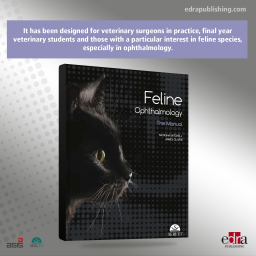
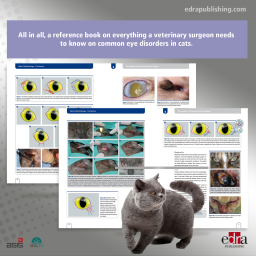
There is no doubt that cats are more and more popular as pets nowadays. It is therefore mandatory for veterinary surgeons to increase their knowledge on the diseases most frequently seen in feline practice. For that reason, the aim of this book is to provide the clinician with a visual guide to accurately diagnose and treat the most common ophthalmological eye disorders in cats. Feline Ophthalmology – The Manual is designed for veterinary surgeons in practice, final year veterinary students and those with a particular interest in feline species, especially in ophthalmology.
This new atlas focuses on how parasitic diseases can be diagnosed, treated, and prevented, with a special emphasis on those aspects on which pet owners can have an influence. It includes a classification of parasitic diseases according to the organ systems they affect, parasites in exotic animals, and a description of the most important zoonoses transmitted by dogs and cats.
This new volume of the collection Pet Owner Educational Atlas aims to help pet owners gain a better understanding of parasites, always through their veterinary surgeon's explanations and recommendations. It continues with the goal established in the first work: helping veterinarians in their communication with the pet owners when it comes to explaining how a parasitic disease is affecting their pets.
This manual on surgery, gathering 30 clinical cases, provides the reader with a better understanding to perform surgeries in dogs and cats with gastrointestinal disorders. Both simple and complex cases are addressed, detailing patient’s history, physical examination, surgical preparation and technique, as well as additional considerations. It is the intention of the authors of this book to present a series of assorted surgical cases related to the digestive system. Surgical situations of dogs and cats with a more frequent presentation, but because of that none less challenging, will be included. Some less commonly presentations, with their own puzzling demands, will be also addressed.
Handy and rigorous book focused on the main viral infections in poultry farming through a practical and visual approach of the topic. Each disease has been thoroughly reviewed including the most updated information (aetiology, epidemiology, clinical signs, etc.) to facilitate its comprehension by the readers.
Technical book on avian inspection, written by an experienced author in this topic, which tackles the most important findings noticed during broiler meat inspection at abattoirs. After starting with an introduction about poultry inspection, the book describes the most significant conditions (pathologies, rejections due to poor processing, offal for human consumption) found during broiler inspection. Each chapter is divided in three parts clearly differentiated: definition, origin, and responsibilities arising for veterinarian/ inspector. A chapter entirely dedicated to animal welfare is included within this book. It is focused on the major aspects to be considered by veterinarian/inspector under compliance with current legislation.
This atlas provides an up-to-date review of avian coccidiosis: its aetiology, epidemiology, clinical signs, etc. Special emphasis has been placed on the diagnosis and control of coccidiosis on poultry farms, with information about the techniques designed to detect coccidia and the current vaccination programmes.
For the general dentist and the experienced endodontist alike, NuEndo is both a guide and a reference tool for the complex processes of endodontic diagnosis, prognosis, and case selection. You will come to fully understand the dynamics of the pulpal-dentin complex, the underlying conditions related to pulpal and periapical disease, and the methods surrounding its assessment.
The new groundbreaking VIMS - Veterinary Internal Medicine Series carries the veterinarians in a transformative journey through the dynamic world of veterinary internal medicine. Arising from a profound understanding of the complexities veterinarians face, each book concentrates on a specific organ system in either dogs or cats, offering unparalleled insights that surpass traditional veterinary resources. Every book in this series offers a clear path to learning current opinions on pathophysiology, diagnosis, treatment, prognosis, and costs associated with illnesses.
Reasons to be OMNIVORE explores humans' omnivorous nature, analyzes the significant challenges in eradicating hunger and examines food production needed for a growing population while respecting animal welfare. The book does not exclude subjects such as laboratory experimentation on living beings, vaccines, or pet nutrition. It approaches ethical considerations with rigor, supported by statistics. The author, a renowned veterinarian and animal advocate, addresses the animal rights debate from multiple perspectives.
This volume of the Pet Owner Educational Atlas series covers the most frequent oral and dental pathologies seen in small animal practice. Pets with dental pathologies usually do not lose their appetite and owners often do not detect if their pet is suffering from oral discomfort or pain. Therefore, early diagnosis of dental pathologies is of vital importance. This book allows veterinarians to explain the importance of early diagnosis to owners, as well as details of their pet’s condition, its possible consequences, and the different treatment options available, among other relevant issues.